Why Office Change of Use is Still Powerful in 2026
Introduction
The UK property market has experienced a structural shift over recent years. With hybrid and remote working now standard across many sectors, office demand has changed significantly. Secondary office buildings, in particular, are facing increasing vacancy rates and declining rental performance.
However, within this challenge lies a major opportunity. Office change of use remains one of the most effective strategies for unlocking value from underperforming assets. In 2026, the concept is still highly relevant, but it requires a far more selective and strategic approach than in previous years.
Not every office building is suitable for conversion to residential use. In many cases, alternative uses such as healthcare, education, or flexible workspace may deliver stronger long-term value.
Recent planning guidance and updates from the UK Planning Portal highlight how permitted development and local policy changes continue to shape conversion opportunities
At Muse Architects, we help developers, investors, and landlords assess both planning feasibility and practical buildability before significant costs are committed. This article explains why office change of use continues to be powerful, and how to identify when it truly works.
The Shift in Office Demand
Alt text: Empty office space due to reduced demand
The demand for office space has not disappeared, but it has evolved. Businesses are rethinking how they use space, often downsizing or adopting hybrid working models. As a result, many older office buildings are no longer aligned with market expectations.
Key trends include reduced demand for secondary office stock, increased preference for high-quality and flexible workspaces, and growing interest in mixed-use developments.
This shift has created a mismatch between supply and demand. While modern offices in prime locations continue to perform well, older buildings in less desirable areas are struggling. These buildings present an opportunity for repositioning through change of use.
What is Office Change of Use
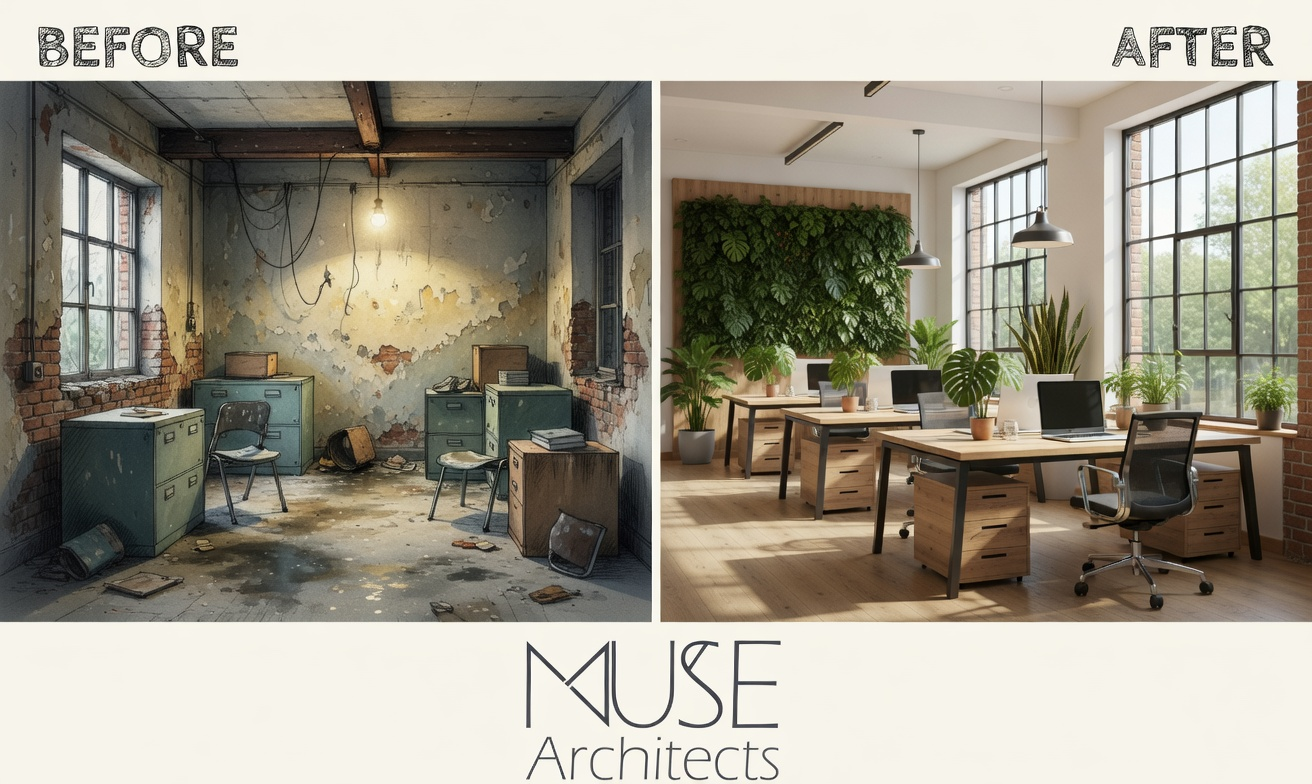
Office change of use refers to converting a building from its existing commercial function into another use class. Most commonly, this involves converting offices into residential units, but it can also include other uses such as healthcare facilities, educational spaces, or creative studios.
While residential conversion is often the default option, it is not always the most suitable or profitable outcome. The success of a project depends on aligning the building’s physical characteristics with the intended use.
Why Office Change of Use Remains Powerful
Strong Residential Demand
The UK continues to face a housing shortage, particularly in urban areas. Converting underused office buildings into residential units helps address this demand while increasing asset value.
For developers and investors, residential conversions can provide stable rental income and strong resale potential when executed correctly.
Planning Opportunities
Permitted Development Rights have made office-to-residential conversion more accessible by allowing certain changes without full planning permission. However, this route still involves detailed assessments and compliance with strict criteria.
Prior approval is required for factors such as natural light, space standards, and environmental impacts. In some areas, Article 4 Directions remove these rights entirely, requiring a full planning application.
Understanding the planning context is essential before proceeding.
Faster Delivery
Compared to new-build developments, change of use projects often benefit from shorter timelines. Existing structures reduce the need for extensive construction work, allowing projects to progress more quickly.
This can be particularly advantageous in uncertain market conditions where speed and cost control are critical.
Sustainability Benefits
Reusing existing buildings significantly reduces carbon emissions compared to demolition and new construction. This aligns with increasing regulatory and market expectations around sustainability.
In 2026, environmental performance is a key consideration for both investors and end users.
Understanding the UK Planning Framework
A successful office change of use project begins with a clear understanding of planning regulations.
Lawful Use
The first step is confirming the building’s lawful use class. Most offices fall within Use Class E, but variations may apply depending on the building’s history.
Article 4 Directions
Local authorities may introduce Article 4 Directions to restrict permitted development rights. In these areas, office-to-residential conversion requires full planning permission.
Ignoring this constraint can lead to delays and additional costs.
Prior Approval vs Full Planning
The prior approval process offers a faster route but limits flexibility. It focuses on technical compliance rather than design quality.
A full planning application allows for greater design freedom but involves a more detailed and time-consuming process.
Choosing the appropriate route depends on the building and its context.
For a full breakdown of prior approval requirements, refer to the UK Government guidance
Local Amenity Considerations
Planning authorities assess how a proposed development will impact its surroundings. Key factors include noise levels, air quality, access to transport, and the effect on neighbouring properties.
Failure to address these issues can result in refusal.
The Reality of Conversion
One of the most common misconceptions is that any office building can be converted into residential units. In practice, many buildings are unsuitable due to design and structural constraints.
Understanding these limitations early is essential to avoid costly mistakes.
Key Building Factors That Determine Success
Daylight and Natural Light
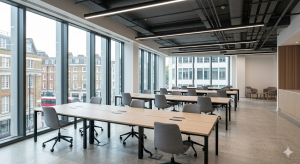
Residential units must provide adequate natural light. Buildings with deep floor plates or limited window access often struggle to meet these requirements.
Poor daylight conditions can lead to planning rejection or reduced market value.
Building Layout
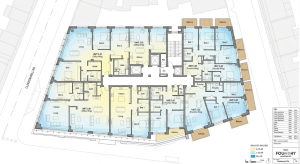
Efficient layouts are critical for creating viable residential units. Large, open office floors may not easily translate into functional apartment layouts.
Structural grids, column spacing, and internal configuration all influence feasibility.
Core Positioning
The location of stairs and lifts affects circulation and unit design. Poorly positioned cores can reduce usable floor area and limit layout options.
Noise Exposure
Buildings located near busy roads, railways, or industrial areas may require significant acoustic mitigation. This can increase costs and reduce viability.
Outlook and Amenity
Residential units must offer acceptable living conditions, including views and access to light. Units facing blank walls or internal voids are unlikely to succeed in the market.
When Residential is Not the Right Choice
In many cases, alternative uses provide better outcomes than residential conversion.
Healthcare Uses
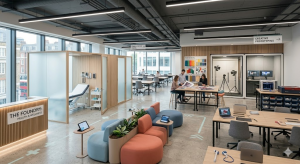
Office buildings with good accessibility can be repurposed as clinics, dental practices, or therapy centres. These uses often require less structural alteration.
Education and Training
Large floor plates can be ideal for training centres, tuition facilities, and educational institutions.
Creative and Studio Spaces
Buildings with open layouts and character can attract creative industries, including designers and content creators.
Flexible Workspaces
Some office buildings can be repositioned rather than converted, offering co-working or serviced office environments tailored to modern needs.
The Muse Architects Approach
Planning Assessment
We evaluate planning routes, local policies, and any restrictions that may affect the project.
Learn more: Musearchitects.co.uk/planning-feasibility
Feasibility Design
We test layout options, unit numbers, and compliance with relevant standards to determine viability.
Explore: Musearchitects.co.uk/change-of-use
Buildability Review
We assess structural constraints, construction complexity, and cost implications to ensure the project is practical as well as compliant.
Services: Musearchitects.co.uk/services
Common Mistakes to Avoid
Many projects fail due to avoidable errors. These include assuming permitted development guarantees approval, ignoring daylight requirements, overestimating unit numbers, and underestimating construction costs.
Another common mistake is pursuing residential conversion without exploring alternative uses that may offer better returns.
Case Insight
In one example, a secondary office building was initially considered for residential conversion. However, deep floor plates and limited natural light made the scheme unviable.
By repositioning the building as a training and education facility, the project achieved lower conversion costs and stronger tenant demand.
This demonstrates the importance of selecting the right strategy rather than forcing a particular outcome.
Financial Considerations
A successful change of use project can significantly increase asset value and generate strong rental yields. However, poor decisions can lead to planning refusal, unsellable units, and escalating costs.
A thorough feasibility assessment is essential to ensure a positive return on investment.
The Future of Office Buildings
The future of office buildings lies in flexibility and adaptability. Mixed-use developments and user-focused design will continue to shape the market.
Buildings that cannot meet modern office requirements must evolve to remain viable. Change of use will play a key role in this transformation.
Conclusion
Office change of use remains a powerful strategy in 2026, but it is not universally applicable. Each building must be assessed on its own merits, considering planning constraints, physical characteristics, and market demand.
Not every office should become residential. In many cases, alternative uses provide better long-term value.
The key to success lies in informed decision-making and early-stage feasibility testing.
FAQs – Office Change of Use UK 2026
Is office change of use still profitable in 2026?
Yes, but only when the building is suitable. Factors like natural light, layout, and local planning rules play a big role.
Do I always need planning permission?
Not always. Some projects qualify under permitted development, but Article 4 areas require full planning.
What makes a building unsuitable?
Poor daylight, deep layouts, noise exposure, and bad core positioning.
Is residential always best?
No. Healthcare, education, and flexible workspace can sometimes give better returns.
Biggest mistake to avoid?
Skipping feasibility checks before committing money.
Call to Action
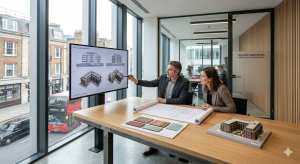
If you own or are considering purchasing an office building, send us the address, floor area, and current use.
We will assess whether residential conversion is realistic or whether another use would unlock greater value.
About Muse Architects
Muse Architects specialises in change of use strategy, planning feasibility, and design-led development. The practice supports developers, investors, and landlords in unlocking the full potential of their assets.
Visit: Musearchitects.co.uk