Muse Architects

What to Check Before You Buy an Office Building for Change of Use

Summarise with AIClaudeChatGPTGeminiWhat to Check Before You Buy an Office Building for Change of Use The cheapest building is not the cheapest project Buying an office building for change of use can appear straightforward—especially when the price looks attractive compared to other opportunities on the market. But experienced developers understand that acquisition price alone does not define value. In many cases, the buildings that seem cheapest at purchase become the most expensive once planning constraints, design limitations, and upgrade costs are fully understood. The real question is not “Is this building cheap?” It is “Can this building actually perform?” Start With the Planning Reality, Not Assumptions Before anything else, you need absolute clarity on the planning position of the building. Two similar-looking offices can have completely different planning outcomes depending on their history and local policy context. Understanding the lawful use, any restrictions tied to previous permissions, and whether permitted development rights apply is critical. In particular, Article 4 directions can remove the ability to convert offices to residential without full planning permission—completely changing the viability of a scheme. In many town centres, local authorities also protect employment space, meaning conversion may be resisted unless clearly justified. For a broader understanding of how these rules are applied, refer to the Planning Portal, which explains how change of use is assessed in practice. At this stage, the goal is simple: confirm whether the building can realistically achieve the intended use before progressing further. The Building Itself: Layout Will Define Value Once planning is understood, attention shifts to the building’s physical reality. This is where many projects begin to lose value. Office buildings were not designed with residential or alternative uses in mind, and this often creates hidden inefficiencies. Deep floorplates can restrict natural light, poorly positioned cores can fragment layouts, and window arrangements can limit how units are configured. These constraints directly impact how much usable space can be created—and therefore how much value the scheme can generate. A building may look viable on paper, but if the layout cannot support efficient, high-quality units, the financial performance will suffer. This is why layout efficiency is not a design detail—it is a commercial driver. Access, Servicing, and Real-World Functionality Beyond layout, the building must also function effectively in real-world use. Access, servicing, and circulation are often overlooked during acquisition, yet they can become major obstacles later. A scheme that lacks clear entry points, appropriate servicing access, or the ability to manage waste and deliveries efficiently may struggle to gain planning approval or operate successfully once complete. This becomes even more critical in mixed-use or alternative schemes, where different uses must coexist without conflict. Poor access planning can create friction between occupants, reduce usability, and ultimately affect long-term value.   The Hidden Costs: Building Regulations and Upgrades One of the most underestimated aspects of office conversion is the cost of bringing the building up to modern standards. Even if planning is achievable and the layout works, the building must comply with current regulations. This often requires significant upgrades, particularly in areas such as fire safety, acoustics, thermal performance, and accessibility. These interventions can have a substantial impact on cost and programme. In some cases, they can fundamentally alter the viability of the project. This is why understanding the likely scope of upgrades early is essential—not as a technical exercise, but as a financial one. Legal Constraints Can Stop a Project Before It Starts While planning and design are often the focus, legal constraints can be just as decisive. Issues such as rights of way, access limitations, parking ownership, and restrictive covenants can all affect what can realistically be delivered. These factors are often overlooked during early-stage decision-making but can create serious complications later. In some cases, they can delay development significantly—or prevent it altogether. A building that appears straightforward from a planning perspective may still carry legal complexities that undermine its potential. The Real Insight: Value Is Created Before You Buy The biggest mistake in office acquisition is focusing too heavily on the purchase price. A cheaper building often comes with hidden costs—inefficient layouts, higher construction requirements, planning challenges, or reduced end value. These issues compound over time, turning what seemed like a good deal into a weak-performing asset. By contrast, a building with stronger fundamentals—even at a higher price—can deliver better returns, lower risk, and a smoother delivery process. The goal is not to minimise upfront cost. It is to maximise long-term performance. The Smart Approach: Test Before You Commit The most successful developers approach acquisitions with discipline. They do not rely on assumptions or optimistic projections—they test the building thoroughly before committing. This involves reviewing planning constraints, analysing layout potential, assessing technical risks, and exploring multiple development strategies. By doing this early, they avoid committing to schemes that look viable but fail under closer scrutiny. This stage is not about slowing the process down—it is about making better decisions.   How Muse Architects Acts as Your Early Filter At Muse Architects, the focus is on helping clients make the right decision before significant time and capital are committed. Rather than pushing a single outcome, we assess each building objectively—testing its potential across planning, design, and commercial performance. Through early feasibility and strategic analysis, we help identify risks, uncover opportunities, and avoid costly mistakes. Explore our architecture and feasibility services: Musearchitects.co.uk/services Learn more about change of use strategy and planning advice: Musearchitects.co.uk/change-of-use Read latest insights on office conversions: Musearchitects.co.uk/blog The Bottom Line Buying an office building for change of use is not just a transaction—it is a strategic decision. The difference between a successful project and a failed one is often determined before the purchase is even completed. Because in reality: The cheapest building is rarely the cheapest project. Call to Action Before you move forward with any acquisition, take a step back and assess the building properly. Ask us to review your building as an early-stage filter before you commit. It could save you significant time, cost, and risk. FAQs 

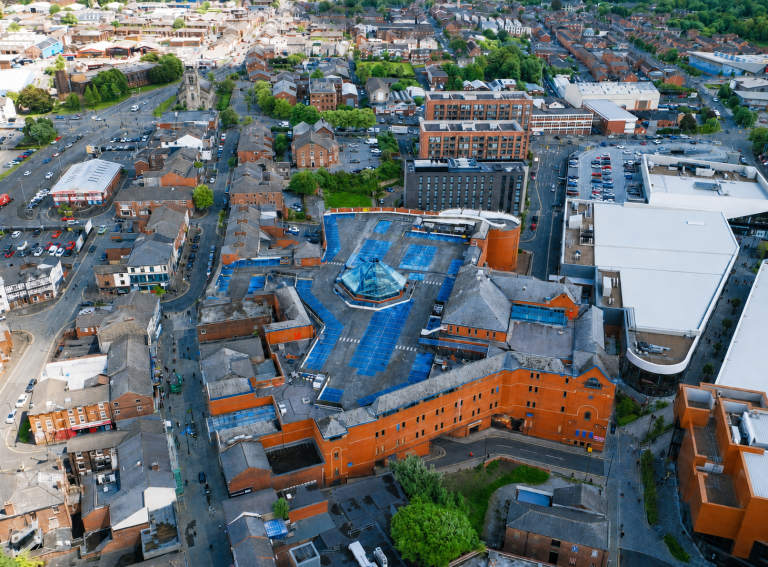
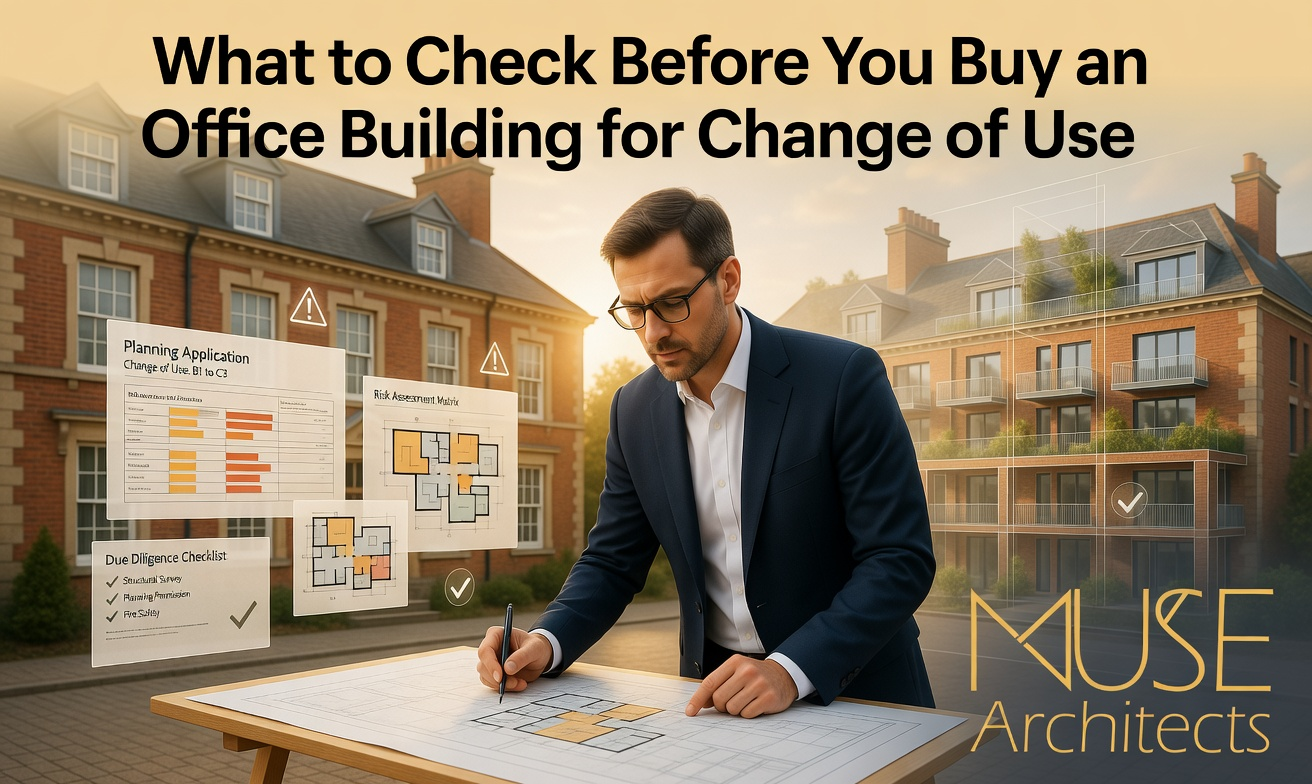
Architect reviewing office building plans and feasibility documents before conversion purchase decision.
Summarise with AI

What to Check Before You Buy an Office Building for Change of Use

The cheapest building is not the cheapest project

Buying an office building for change of use can appear straightforward—especially when the price looks attractive compared to other opportunities on the market.

But experienced developers understand that acquisition price alone does not define value. In many cases, the buildings that seem cheapest at purchase become the most expensive once planning constraints, design limitations, and upgrade costs are fully understood.

The real question is not “Is this building cheap?”
It is “Can this building actually perform?”

Start With the Planning Reality, Not Assumptions

Before anything else, you need absolute clarity on the planning position of the building. Two similar-looking offices can have completely different planning outcomes depending on their history and local policy context.

Understanding the lawful use, any restrictions tied to previous permissions, and whether permitted development rights apply is critical. In particular, Article 4 directions can remove the ability to convert offices to residential without full planning permission—completely changing the viability of a scheme.

In many town centres, local authorities also protect employment space, meaning conversion may be resisted unless clearly justified. For a broader understanding of how these rules are applied, refer to the Planning Portal, which explains how change of use is assessed in practice.

At this stage, the goal is simple: confirm whether the building can realistically achieve the intended use before progressing further.
The Building Itself: Layout Will Define Value

Once planning is understood, attention shifts to the building’s physical reality. This is where many projects begin to lose value.

Office buildings were not designed with residential or alternative uses in mind, and this often creates hidden inefficiencies. Deep floorplates can restrict natural light, poorly positioned cores can fragment layouts, and window arrangements can limit how units are configured.

These constraints directly impact how much usable space can be created—and therefore how much value the scheme can generate.

A building may look viable on paper, but if the layout cannot support efficient, high-quality units, the financial performance will suffer. This is why layout efficiency is not a design detail—it is a commercial driver.

Access, Servicing, and Real-World Functionality

Beyond layout, the building must also function effectively in real-world use. Access, servicing, and circulation are often overlooked during acquisition, yet they can become major obstacles later.

A scheme that lacks clear entry points, appropriate servicing access, or the ability to manage waste and deliveries efficiently may struggle to gain planning approval or operate successfully once complete.

This becomes even more critical in mixed-use or alternative schemes, where different uses must coexist without conflict. Poor access planning can create friction between occupants, reduce usability, and ultimately affect long-term value.
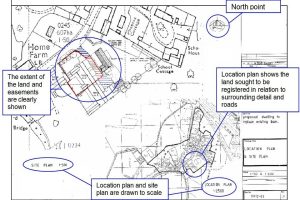
 

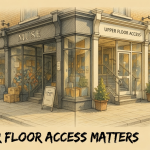
Building access and servicing layout showing circulation routes, entry points, and operational planning considerations.

The Hidden Costs: Building Regulations and Upgrades

One of the most underestimated aspects of office conversion is the cost of bringing the building up to modern standards.

Even if planning is achievable and the layout works, the building must comply with current regulations. This often requires significant upgrades, particularly in areas such as fire safety, acoustics, thermal performance, and accessibility.

These interventions can have a substantial impact on cost and programme. In some cases, they can fundamentally alter the viability of the project.

This is why understanding the likely scope of upgrades early is essential—not as a technical exercise, but as a financial one.

Legal Constraints Can Stop a Project Before It Starts

While planning and design are often the focus, legal constraints can be just as decisive.

Issues such as rights of way, access limitations, parking ownership, and restrictive covenants can all affect what can realistically be delivered. These factors are often overlooked during early-stage decision-making but can create serious complications later.

In some cases, they can delay development significantly—or prevent it altogether.

A building that appears straightforward from a planning perspective may still carry legal complexities that undermine its potential.

The Real Insight: Value Is Created Before You Buy

The biggest mistake in office acquisition is focusing too heavily on the purchase price.

A cheaper building often comes with hidden costs—inefficient layouts, higher construction requirements, planning challenges, or reduced end value. These issues compound over time, turning what seemed like a good deal into a weak-performing asset.

By contrast, a building with stronger fundamentals—even at a higher price—can deliver better returns, lower risk, and a smoother delivery process.

The goal is not to minimise upfront cost.
It is to maximise long-term performance.

The Smart Approach: Test Before You Commit

The most successful developers approach acquisitions with discipline. They do not rely on assumptions or optimistic projections—they test the building thoroughly before committing.

This involves reviewing planning constraints, analysing layout potential, assessing technical risks, and exploring multiple development strategies.

By doing this early, they avoid committing to schemes that look viable but fail under closer scrutiny.

This stage is not about slowing the process down—it is about making better decisions.


How Muse Architects Acts as Your Early Filter

At Muse Architects, the focus is on helping clients make the right decision before significant time and capital are committed.

Rather than pushing a single outcome, we assess each building objectively—testing its potential across planning, design, and commercial performance.

Through early feasibility and strategic analysis, we help identify risks, uncover opportunities, and avoid costly mistakes.

Explore our architecture and feasibility services: Musearchitects.co.uk/services
Learn more about change of use strategy and planning advice: Musearchitects.co.uk/change-of-use
Read latest insights on office conversions: Musearchitects.co.uk/blog

The Bottom Line

Buying an office building for change of use is not just a transaction—it is a strategic decision.

The difference between a successful project and a failed one is often determined before the purchase is even completed.

Because in reality:

The cheapest building is rarely the cheapest project.

Call to Action

Before you move forward with any acquisition, take a step back and assess the building properly.

Ask us to review your building as an early-stage filter before you commit.

It could save you significant time, cost, and risk.

FAQs 

What should I check before buying an office for conversion?
Planning status, layout efficiency, access, servicing, legal constraints, and building regulation requirements.

What is Article 4 and why does it matter?
It removes permitted development rights, meaning full planning permission is required for change of use.

Can all office buildings be converted?
No. Many have layout, planning, or structural limitations that reduce viability.

Why is layout important in conversions?
It affects usable space, unit quality, and overall profitability.

How can I reduce risk before buying?
By conducting feasibility studies and testing multiple development options early.

Leave a Reply

Your email address will not be published. Required fields are marked *

Select the fields to be shown. Others will be hidden. Drag and drop to rearrange the order.
  • Image
  • SKU
  • Rating
  • Price
  • Stock
  • Availability
  • Add to cart
  • Description
  • Content
  • Weight
  • Dimensions
  • Additional information
Click outside to hide the comparison bar
Compare