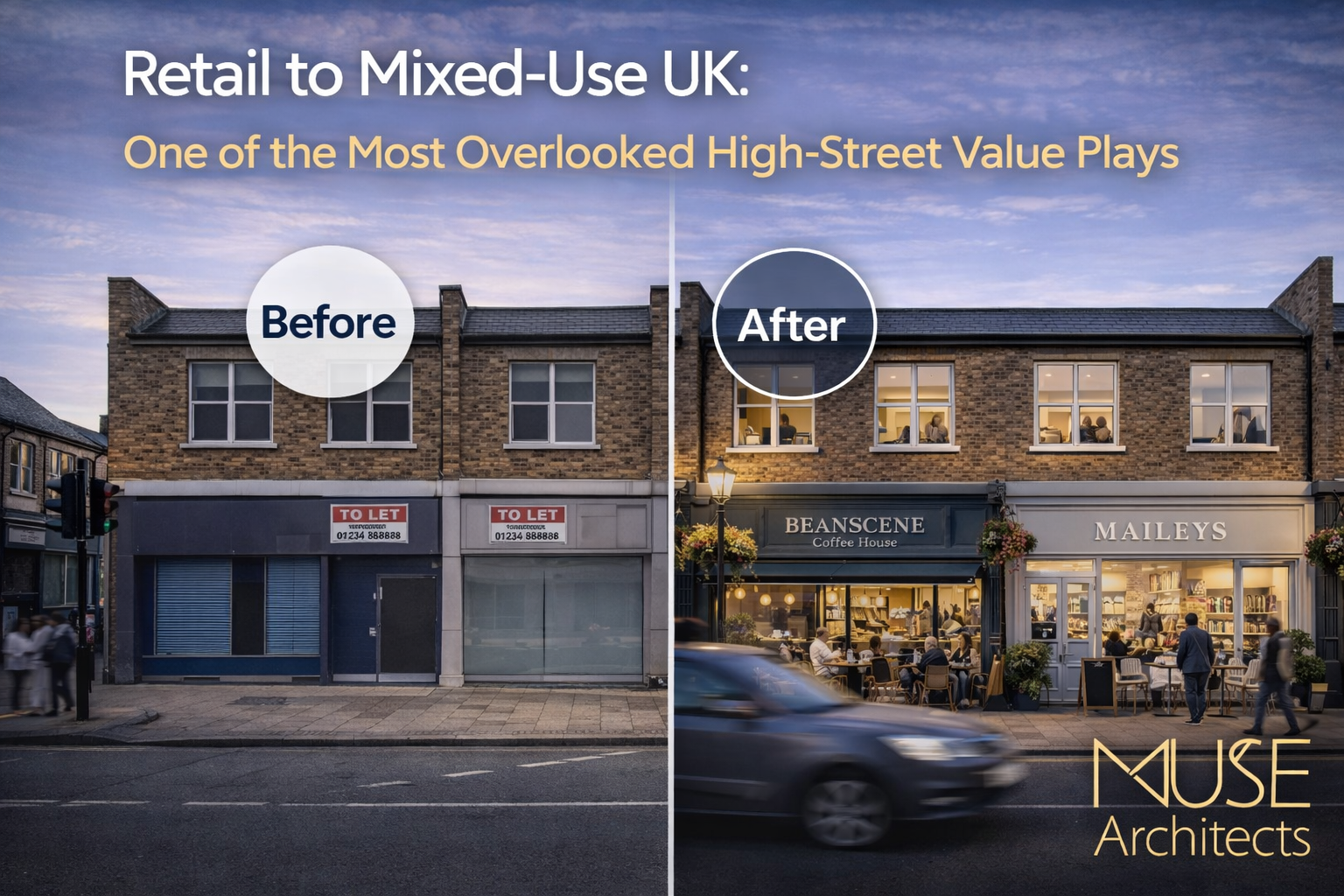
Retail to Mixed-Use UK: One of the Most Overlooked High-Street Value Plays
Across UK high streets, a structural shift is underway.
Retail units that once delivered consistent income are now under pressure. Vacancy periods are longer, tenant demand is more selective, and rental growth is less predictable than it once was.
Yet many landlords and investors still treat these buildings as single-use retail assets.
This is where value is often missed.
The opportunity is not always in replacing retail—but in repositioning the building into a mixed-use asset that performs more reliably over time.
A well-considered retail to mixed-use conversion in the UK can transform an underperforming shop into a resilient, income-diversified property.
The key is understanding how to unlock that value without disrupting what already works.
At Muse, this is a common starting point—looking beyond the shopfront to evaluate how the entire building can perform more effectively.
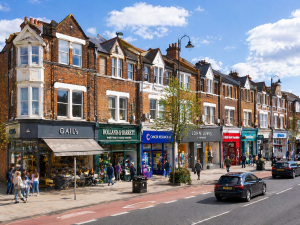
Why Retail-Only Property Is Becoming Less Reliable
The challenges affecting high street retail property in the UK are not temporary—they are structural.
Changes in consumer behaviour, growth in e-commerce, and evolving occupier requirements have reshaped demand for retail space.
As a result, many retail-only assets now face:
- Increased vacancy and void periods
- Reduced rental values and incentives
- Shorter leases and higher turnover
- Greater exposure to economic shifts
This creates instability in what was once considered a secure asset class.
The issue is not always the building—it is the reliance on a single use.
A retail-only property strategy concentrates risk, whereas mixed-use property in the UK spreads it.
For a broader understanding of how repositioning improves long-term performance, our property investment strategies guide explains how different asset strategies can unlock value.
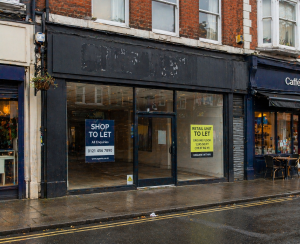
What Is Retail to Mixed-Use Conversion in the UK?
A retail to mixed-use conversion UK strategy involves retaining active ground-floor retail while introducing additional uses within the building.
This typically includes:
- Residential units (flats above shops)
- Commercial uses (offices, studios, clinics)
- Flexible or hybrid workspaces
The goal is to create a property that generates income from multiple sources rather than relying solely on retail performance.
This approach aligns with the long-term evolution of UK town centres, where mixed-use development is becoming the dominant model.
Why Mixed-Use Property Creates Stronger High-Street Assets
Income Diversification and Risk Reduction
One of the main advantages of mixed-use property investment in the UK is the ability to spread risk across different income streams.
If retail demand weakens, residential or commercial uses can provide stability.
This reduces exposure to market fluctuations.
Unlocking Underutilised Space Above and Behind Shops
Many high-street buildings have unused upper floors or rear areas.
These spaces often generate little to no income in their current state.
By converting them into productive uses, landlords can significantly improve overall asset performance.
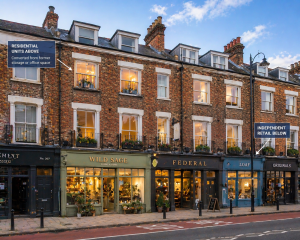
Improved Asset Resilience and Long-Term Value
A well-executed retail to mixed-use strategy creates a more adaptable and resilient property.
It aligns with changing market conditions and supports long-term value growth.
Planning Permission for Retail to Mixed-Use UK
Planning is a critical factor in any retail to mixed-use conversion UK project.
Applications are typically submitted through the Planning Portal www.planningportal.co.uk
However, approval depends on several key considerations.
Active Frontage and Town Centre Policy
Local authorities often require the retention of active retail frontage, particularly in designated town centres.
Removing retail entirely is rarely supported.
Instead, planning policy often encourages mixed-use development while preserving street-level activity.
Residential Amenity and Quality Standards
Where residential use is introduced, planning authorities will assess:
- Daylight and outlook
- Noise from retail operations
- Privacy and internal layout
- Overall living standards
These factors directly influence approval.
Servicing, Waste, and Operational Practicality
Introducing multiple uses increases demand for servicing and waste management.
Design must ensure that these elements function efficiently without conflict.
To understand how planning decisions are structured in more detail, our UK planning permission guide provides a clear breakdow.
The Real Constraints in Retail to Mixed-Use Conversion
The biggest challenges in mixed-use development UK are rarely conceptual—they are practical.
Access and Independent Entrances
Residential or commercial uses above retail require independent access.
This is essential for compliance, usability, and long-term value.
Building Depth and Layout Efficiency
Deep or poorly configured buildings can limit the ability to create viable units.
Efficient layout is critical for both residential and commercial success.
Noise and Compatibility Between Uses
Retail activity can create noise and operational conflict with residential use.
This must be addressed through design and planning.
Infrastructure and Servicing
Utilities, waste management, and deliveries must be carefully integrated across multiple uses.
Poor coordination can reduce functionality and tenant appeal.
A Smarter Strategy: Retain Retail, Reposition the Rest
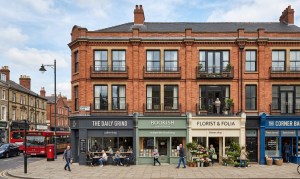
The most effective retail to mixed-use conversions do not remove retail—they build around it.
This includes:
- Retaining active ground-floor frontage
- Converting upper floors into residential or commercial use
- Reorganising rear areas for better utilisation
- Improving access, layout, and circulation
This approach creates a balanced and high-performing asset without unnecessary risk.
Common Mistakes in Retail to Mixed-Use Conversion UK
Where Value Is Lost
Many projects fail due to poor early-stage decisions.
Common mistakes include:
- Removing retail without understanding demand
- Ignoring planning policy constraints
- Underestimating access and servicing challenges
- Overestimating achievable rental values
- Failing to assess long-term asset performance
These issues can turn a strong opportunity into a high-risk project.
A structured feasibility approach helps avoid these outcomes.
UK High Street Trends Driving Mixed-Use Development
What Is Changing in 2026
UK high streets are transitioning toward mixed-use environments.
Retail is no longer the sole driver of activity.
Residential, workspace, and service-based uses are becoming increasingly integrated into town centres.
This shift is creating opportunities for retail to mixed-use conversion in the UK, particularly for underperforming retail assets.
However, success depends on aligning strategy with location and demand.
Retail to Mixed-Use Checklist UK: How to Assess Potential
Before committing to a retail to mixed-use conversion, key questions should be answered:
- Can active retail frontage be retained?
- Is there potential for upper floor or rear conversion?
- Is independent access achievable?
- Will planning policy support the proposal?
- Are servicing and infrastructure manageable?
- Is there demand for the proposed uses?
These factors determine whether the strategy is viable.
How Muse Helps You Reposition High-Street Property
A Planning-Led, Commercial Approach
Muse works with landlords, investors, and developers to assess retail to mixed-use opportunities in the UK before commitments are made.
This includes:
- Planning and policy analysis
- Building and layout feasibility
- Access and servicing strategy
- Commercial viability assessment
- Design and repositioning strategy
Why This Approach Delivers Better Results
Mixed-use projects often fail due to overlooked constraints.
By testing feasibility early, Muse ensures that strategies are realistic, deliverable, and commercially sound.
To understand how this approach works in practice, you can explore Muse Architects.
Or if you want tailored advice, you can contact the team here.
Conclusion: From Single-Use Risk to Multi-Use Resilience
Retail-only property is no longer always the strongest strategy in the UK.
By introducing mixed-use elements, landlords can:
- Reduce reliance on retail performance
- Unlock underutilised space
- Improve income stability
- Create more resilient assets
The opportunity is not in replacing retail—but in making the building work harder overall.
Call to Action
Before committing to a retail-only strategy, it is worth assessing whether a mixed-use approach could unlock more value.
Ask us whether your high-street property should stay retail-only or move to mixed-use—we will review your building and identify the most viable strategy.
Frequently Asked Questions
What is retail to mixed-use conversion UK?
It involves combining retail with residential or commercial uses within the same building.
Is mixed-use better than retail-only property?
In many cases, yes. It improves resilience and reduces risk.
Do I need planning permission for retail to mixed-use conversion?
Yes, most projects require planning approval depending on the proposed changes.
Can I convert upper floors above shops into flats?
Yes, subject to planning, access, and building constraints.
What are the biggest challenges in mixed-use projects?
Access, planning policy, servicing, and compatibility between uses are key challenges.