Former Banks, Showrooms & Large Town-Centre Units in the UK: What Could They Become?
Across UK town centres, a familiar pattern is emerging.
Large, prominent buildings—former banks, showrooms, and oversized retail units—sitting vacant or underused.
These buildings often occupy prime locations, with strong frontage, visibility, and civic presence.
At first glance, they look like obvious opportunities.
But in reality, they are rarely straightforward.
The challenge is not just finding a use.
It is finding the right use—one that works commercially, operationally, and within planning constraints.
The key insight is this:
The best strategy for these buildings is rarely obvious on first viewing.
At Muse, this is where the process begins—translating character, scale, and constraints into a viable commercial strategy.
Why Former Banks and Large Town-Centre Units in the UK Matter for Property Strategy
Former banks, showrooms, and large town-centre units in the UK represent a unique category of opportunity.
They typically offer:
- Prominent corner or high-street locations
- Strong architectural presence
- Large internal volumes
- Flexible potential under Class E use UK
However, these same characteristics also create complexity.
This is why commercial property repositioning in the UK is essential for unlocking their value.
For a broader perspective, our property investment strategies guide explains how repositioning underperforming assets can improve long-term returns.
What Could These Buildings Become?
There is no single answer.
The strength of these assets lies in their ability to support multiple future uses—if approached correctly.
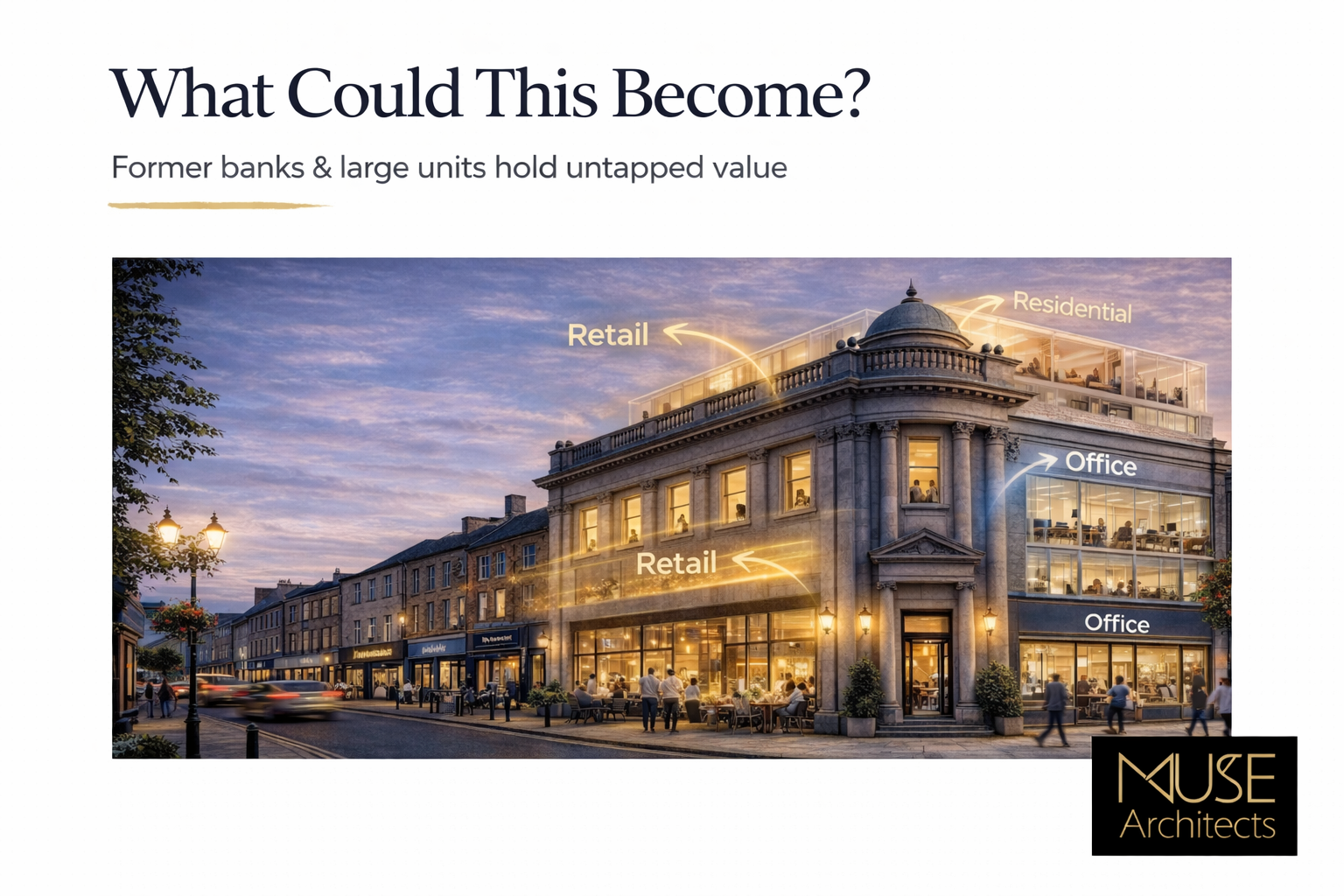
Mixed-Use Development (Retail + Residential or Workspace)
One of the most common strategies is mixed-use development in the UK.
This involves:
- Retaining active ground-floor frontage
- Introducing residential or workspace above or behind
This approach spreads risk and improves long-term resilience.
Leisure and Experience-Led Uses
Large internal volumes make these buildings well-suited to:
- Gyms and fitness spaces
- Indoor leisure concepts
- Entertainment-led uses
These uses benefit from visibility and central locations.
Workspace and Flexible Office
Former banks and showrooms often convert well into:
- Co-working spaces
- Studios
- Professional offices
Particularly in areas with growing demand for flexible workspace.
Clinics and Health-Led Uses
Medical, dental, and wellness uses often perform well in prominent locations.
They benefit from accessibility and visibility.
Carefully Planned Residential Conversion
In some cases, residential conversion UK is viable.
However, this is rarely straightforward due to layout and building constraints.
Key Constraints in Converting Former Banks and Town-Centre Buildings in the UK
While these buildings offer flexibility, they also come with significant challenges.
Understanding these early is critical.
Heritage and Planning Constraints
Many former banks and civic buildings are listed or located in conservation areas.
This limits what can be altered externally and internally.
Planning applications are typically submitted through the Planning Portal.
More complex cases may involve the Planning Inspectorate.
To understand how planning decisions are made, our UK planning permission guide provides a detailed breakdown.
Servicing and Access Challenges
Large town-centre buildings often have:
- Limited servicing access
- Restricted delivery routes
- No dedicated parking
These constraints affect what uses are viable.
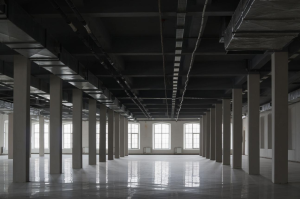
Oversized Rooms and Deep Floor Plates
Former banks and showrooms often include:
- Large open halls
- Deep rear areas
- Limited natural light in certain zones
These features can make residential conversion or subdivision difficult without careful design.
Active Frontage Policy
Local authorities often require active uses at ground level.
This limits the ability to convert entire buildings into non-retail uses.
Why the First Idea Is Often the Wrong One
A common mistake in town-centre property investment UK is relying on the first idea that comes to mind.
For example:
- Assuming residential will always work
- Assuming retail demand will return
- Overlooking operational constraints
In reality, these buildings require a multi-layered strategy.
The right answer often emerges only after testing:
- Planning constraints
- Market demand
- Building layout
- Operational feasibility
A Smarter Strategy for Large Commercial Property Repositioning in the UK
The most effective way to unlock value is to test multiple scenarios before committing.
This includes:
- Mixed-use configurations
- Partial conversion strategies
- Retained frontage with new uses behind
- Hybrid commercial models
This approach reduces risk and improves decision-making.
It also aligns with how modern UK property development is evolving—toward flexible, resilient assets.
Where Real Value Comes From in Large Town-Centre Property Conversion UK
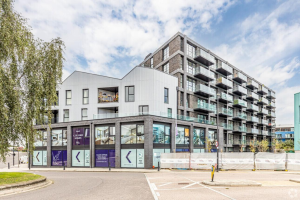
Value in these buildings is not created by forcing a single use.
It is created by:
- Aligning use with building form
- Working within planning constraints
- Designing around operational reality
- Creating a clear, deliverable strategy
This is where many projects succeed—or fail.
How Muse Approaches Former Bank and Town-Centre Unit Conversion in the UK
A Strategic, Feasibility-Led Approach
Muse works with landlords, developers, and investors to assess large town-centre buildings in the UK before purchase or design.
This includes:
- Strategic options review
- Planning and policy analysis
- Building and layout feasibility
- Commercial viability assessment
- Design-led repositioning strategy
Why This Matters
These buildings are rarely simple—but they can be highly valuable if approached correctly.
Muse focuses on identifying realistic, deliverable strategies rather than speculative ideas.
To see how this approach works in practice, you can explore Muse Architects
Or if you want a direct review, you can contact the team here.
Conclusion: Turning Complex Town-Centre Buildings into Valuable UK Assets
Former banks, showrooms, and large town-centre units are some of the most interesting opportunities in UK property today.
They offer scale, presence, and flexibility—but also complexity.
The key is not rushing to a solution.
It is understanding the building properly and developing a strategy that works in reality—not just on paper.
Get a Strategic Review for Your Former Bank or Town-Centre Unit in the UK
Before committing to a landmark but complex building, it is essential to understand what is actually possible.
Ask us for a strategic options review—we will assess the building and identify the most viable routes before you commit to purchase or design.
FAQs About Former Bank and Town-Centre Property Conversion in the UK
Can former banks be converted into residential use in the UK?
Yes, but it depends on layout, planning constraints, and building characteristics.
What is the best use for large town-centre units?
It varies. Mixed-use, leisure, workspace, and service-led uses are often strong options.
Are planning constraints a major issue?
Yes, particularly for listed buildings or those in conservation areas.
Why are these buildings difficult to convert?
Because of their size, layout, servicing limitations, and planning constraints.
How do I assess whether a building is viable?
By testing planning, layout, demand, and operational factors together.