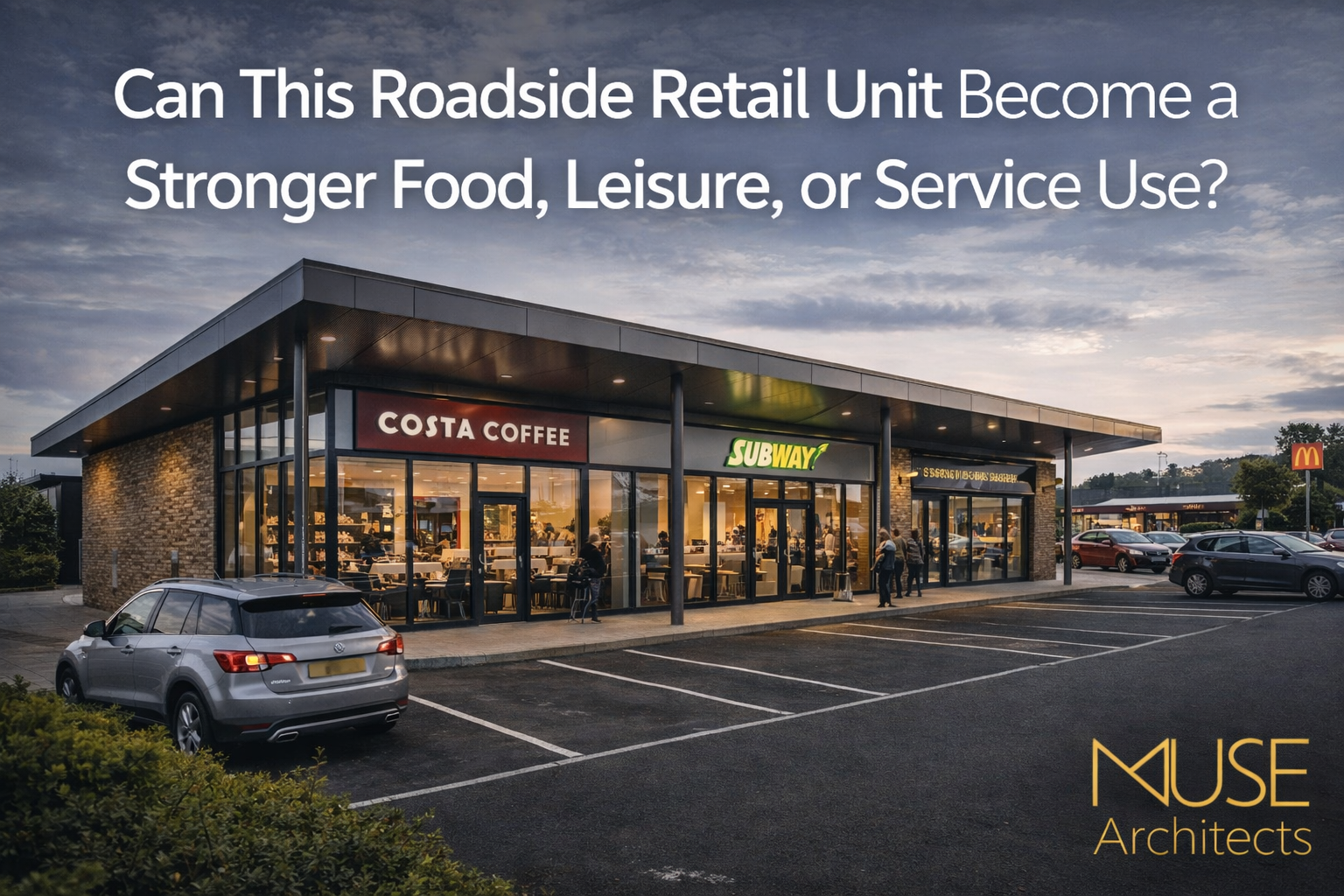
Can This Roadside or Retail Unit Become a Stronger Food, Leisure, or Service Use?
Across UK roadside locations, corner plots, and prominent retail positions, there is a common issue that often goes unnoticed.
Units that appear well-located—with strong visibility and passing traffic—are underperforming.
The assumption is usually that demand is weak.
But in many cases, the problem is not the location.
It is the use.
The reality is simple:
A strong location can underperform with the wrong use—and outperform significantly with the right one.
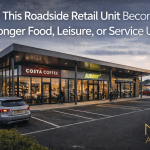
This is particularly true for roadside retail units in the UK, where visibility, access, and customer behaviour create opportunities beyond traditional retail.
At Muse, this is a common starting point—testing whether the current use is limiting the building’s potential.
Why Roadside and Corner Units Are Often More Valuable Than They Look
Not all commercial locations are equal.
Some sites—particularly roadside units and corner retail properties in the UK—have inherent advantages that are often underutilised.
High Visibility and Passing Traffic
Roadside units benefit from constant exposure.
Passing vehicles, pedestrians, and repeat journeys create strong awareness.
This makes them ideal for uses that rely on impulse visits or regular repeat customers.
Easy Access and Parking
Access is one of the most important factors in commercial property performance UK.
Roadside units often benefit from:
- Direct access from main roads
- Short-stay parking
- Drop-off convenience
These features support uses such as food, leisure, and service-based businesses.
Repeat Customer Patterns
Unlike destination retail, many roadside uses benefit from repeat behaviour.
This includes:
- Daily coffee stops
- Regular fitness visits
- Routine service appointments
This creates more consistent and predictable demand.
Why Standard Retail Use Often Underperforms
Many roadside units are still marketed as traditional retail shops.
However, retail-only use in the UK is no longer always the strongest option—particularly in roadside or secondary locations.
Common issues include:
- Low footfall relative to town centres
- Reduced reliance on physical retail
- Competition from online shopping
As a result, small retail units UK often struggle when positioned purely as shops.
The issue is not always demand—it is the mismatch between use and location.
The Opportunity: Repositioning to Food, Leisure, or Service Use
The flexibility of Class E use in the UK allows many roadside units to shift toward stronger-performing uses.
Food-Led Uses
Cafés, takeaways, and quick-service restaurants often perform well in roadside locations due to:
- Visibility
- Convenience
- Repeat customer behaviour
However, success depends on planning and operational considerations.
Leisure and Fitness Uses
Gyms, studios, and indoor leisure concepts benefit from accessibility and repeat visits.
These uses can create stable, long-term occupancy.
Service-Based Businesses
Clinics, salons, and specialist services often outperform retail in roadside settings.
They rely less on footfall and more on accessibility and local demand.
This is where commercial property repositioning in the UK becomes a key value driver.

Planning Considerations for Roadside Use Change UK
Planning is a critical factor in any roadside retail to food or leisure conversion UK strategy.
Applications are typically submitted through the Planning Portal.
Key considerations include:
Extraction, Odour, and Noise
Food uses often require extraction systems.
These must be carefully designed to minimise impact on neighbouring properties.
Opening Hours and Neighbour Impact
Extended hours can create concerns around noise and disturbance.
Planning authorities will assess the impact on surrounding uses.
Deliveries and Servicing
Food and leisure uses often increase delivery frequency.
Access and servicing arrangements must be workable.
Parking and Traffic Flow
Increased usage can affect parking demand and traffic patterns.
This must be considered as part of the planning process.
More complex cases may involve the Planning Inspectorate.
To understand how planning decisions are structured, our UK planning permission guide provides further detail.
Operational Reality: What Makes a Use Actually Work
Beyond planning, operational factors determine whether a use will succeed.
Customer Flow and Peak Times
Different uses create different patterns of demand.
For example:
- Food uses peak at lunch and evening
- Gyms peak before and after work
- Clinics operate on scheduled appointments
Understanding these patterns is essential.
Layout and Internal Functionality
The building must support the intended use.
This includes:
- Kitchen space for food uses
- Open areas for leisure
- Private rooms for services
Branding and Visibility
Roadside units rely heavily on visibility.
Clear signage and strong frontage are essential for attracting customers.
EV Charging and Roadside Opportunity (Emerging Factor)
An increasingly relevant factor in roadside commercial property UK is EV charging.
Where suitable, EV charging integration can:
- Increase dwell time
- Attract repeat visitors
- Support food and leisure uses
However, this must be carefully positioned to avoid disrupting access and circulation.
Common Mistakes in Roadside Repositioning
Where Value Is Lost
Many projects fail due to poor early-stage decisions.
Common mistakes include:
- Retaining retail use without testing alternatives
- Ignoring planning constraints (odour, noise, servicing)
- Underestimating operational requirements
- Overlooking parking and access limitations
- Failing to assess local demand
These mistakes often lead to underperformance or planning refusal.
Roadside Unit Checklist UK: How to Assess Potential
Before committing to a roadside retail conversion UK, key questions should be answered:
- Does the unit have strong visibility?
- Is access and parking sufficient?
- What uses are in demand locally?
- Are neighbouring uses compatible?
- Will planning support the proposed use?
- Can the building support operational requirements?
These factors determine whether repositioning will succeed.
How Muse Helps Unlock Roadside Property Value
A Strategy-Led, Practical Approach
Muse works with landlords, developers, and operators to assess roadside retail opportunities in the UK before commitments are made.
This includes:
- Use strategy and feasibility
- Planning and policy analysis
- Operational and layout assessment
- Location and demand analysis
- Commercial viability evaluation
Why This Approach Works
Many roadside units underperform not because of location—but because of the wrong use.
By testing both planning and trading logic, Muse helps identify strategies that are realistic and commercially effective.
To see how this approach works in practice, you can explore Muse Architects.
Or if you want a direct review of your property, you can contact the team here.
Conclusion: The Right Use Unlocks the Real Value
Roadside and prominent retail units often have more potential than they initially appear.
The key is not just improving the building—but choosing the right use.
When visibility, access, and demand are aligned with the correct strategy, these units can outperform traditional retail significantly.
Call to Action
If your roadside unit feels underutilised, the issue may not be the location—it may be the use.
Ask us whether your roadside unit is undertrading because the current use is the wrong use—we will assess the site and identify stronger alternatives based on planning, operations, and demand.
Frequently Asked Questions
Can a retail unit be converted into a food or leisure use in the UK?
Yes, subject to planning approval and operational considerations.
What makes roadside units suitable for food or leisure use?
Visibility, access, parking, and repeat customer behaviour are key factors.
Do I need planning permission for food use?
In many cases, yes—especially where extraction or extended hours are involved.
What are the biggest risks in roadside conversion?
Planning constraints, operational challenges, and poor use selection.
Can EV charging improve roadside property performance?
Yes, in some cases it can increase dwell time and customer engagement.