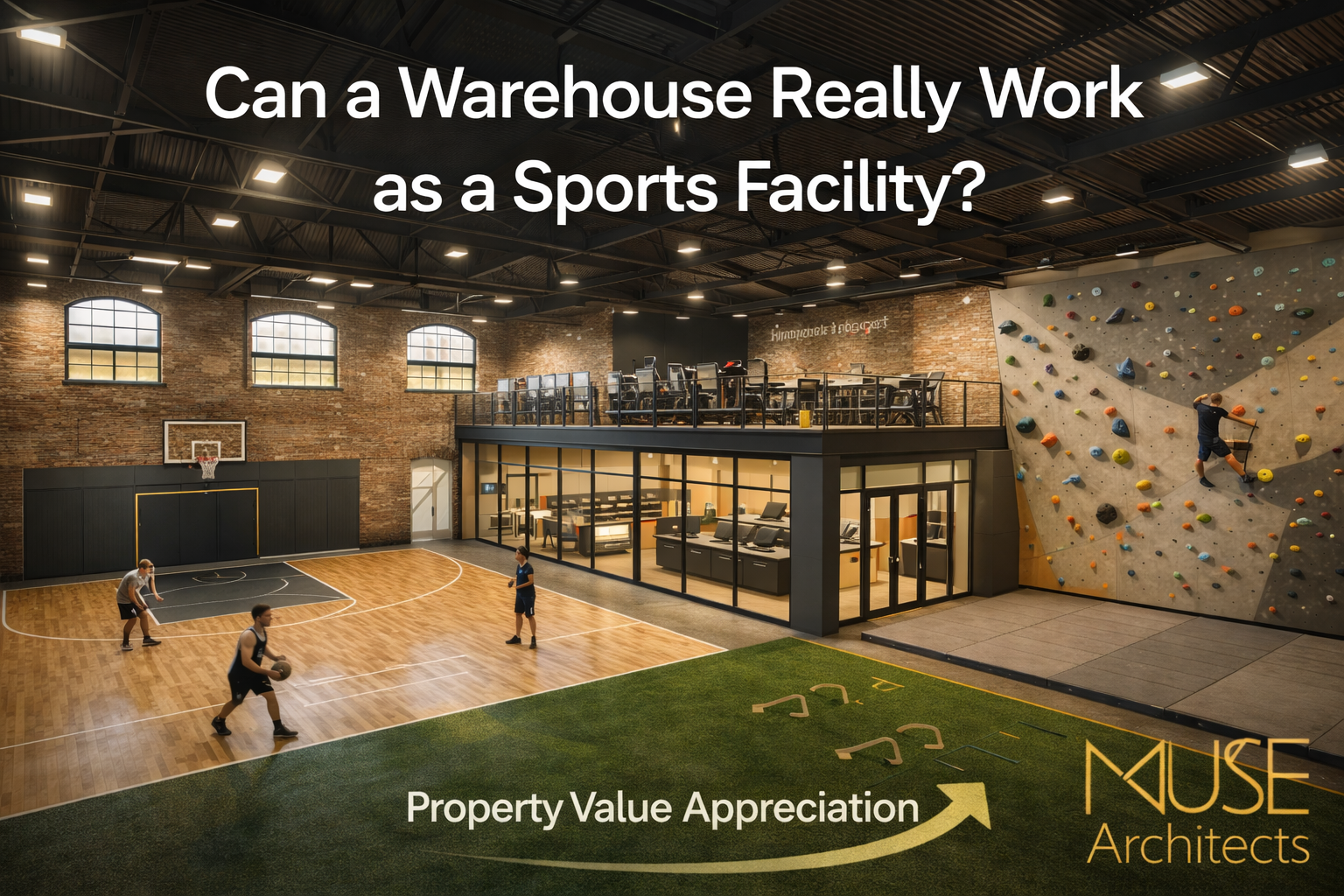
Can a Warehouse Really Work as a Sports Facility?
Warehouse-to-sports facility conversion is gaining momentum across the UK—but most ideas fail before they even begin.
On paper, the concept looks simple: large space, high ceilings, flexible layout. Perfect for padel, boxing, football training, or climbing.
In reality, it is far more selective.
The question is not “Can this warehouse become a sports facility?”
It is “Will this building actually work for the sport, the users, and the location?”
This is where most projects fall apart.
At Muse, this is tested at the very beginning. Before any agreement or heads of terms, both the planning route and operational viability are reviewed together—so clients know whether the concept is realistic, not just possible.
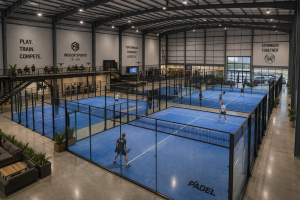
Why Warehouse to Sports Facility Conversion Is Growing in 2026
The rise of indoor sports is not slowing down.
Padel courts, boxing gyms, martial arts studios, climbing walls, and small-sided football are all expanding rapidly across the UK.
At the same time, certain warehouse and industrial units are becoming underutilised or misaligned with modern logistics demand.
This creates a clear opportunity for warehouse change of use.
But opportunity does not guarantee success.
The buildings that work well share specific characteristics such as adequate height, clear spans, accessible locations, and minimal neighbour conflict.
This shift is closely tied to how investors are repositioning commercial assets. If you want a broader understanding of how these opportunities are evaluated, our guide on property investment strategies in the UK explains how different uses can unlock value
Why Most Warehouse Sports Conversions Fail
One of the biggest mistakes is assuming that space equals suitability.
It does not.
Many warehouses fail due to fundamental issues that are often overlooked at the acquisition stage.
These include insufficient ceiling height, structural columns disrupting layouts, poor acoustics, limited access or parking, and sensitive neighbouring uses.
Even if planning is achievable, these issues can make the operation unworkable.
This is why warehouse to sports facility conversion must be assessed as an operational model—not just a design idea.
Understanding Warehouse Change of Use in the UK
What Actually Determines Viability
A warehouse change of use is not just about switching planning use classes.
It is about whether the building can support the sport itself, the user experience, and the operational flow.
In the UK, planning authorities also assess impact—particularly traffic, noise, and compatibility with surrounding uses.
This means a scheme must work across three key layers: planning, physical building, and operations.
If one fails, the entire project weakens.
Key Building Requirements for Sports Facility Conversion
When assessing a warehouse for sports use, certain building characteristics are essential.
Clear height is critical for sports such as padel, climbing, and football training. Column spacing must allow efficient layouts, while large clear spans provide flexibility.
Acoustics are equally important, as sports generate continuous noise that can affect neighbouring properties and planning approval.
Access, circulation, and internal flow must support users, staff, and peak demand periods.
Ignoring any of these can compromise the entire scheme.
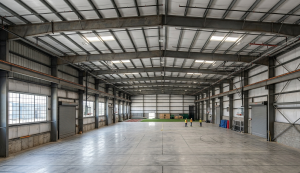
UK Planning Considerations for Warehouse Sports Conversions
Change of Use and Planning Routes
Most warehouse to sports facility conversions require a formal change of use application.
Planning applications are typically submitted through the Planning Portal
www.planningportal.co.uk
Depending on the site and use class, permission is required to move from industrial to leisure or assembly use.
More complex or contested cases may be reviewed by the Planning Inspectorate.
Why Local Impact Is a Deciding Factor
Planning decisions are heavily influenced by how the use affects its surroundings.
Authorities assess noise levels, traffic generation, parking capacity, and neighbouring uses.
A strong concept can still fail if local impact is not properly addressed.
To better understand how planning decisions are structured, our UK planning permission guide provides a detailed breakdown
[Internal Link: /planning-permission-guide]
Operations: The Factor Most People Ignore
This is where many warehouse sports projects break down.
A sports facility is not a passive use—it is dynamic, with fluctuating demand patterns.
Peak hours, group sessions, and events create pressure on parking, access, and circulation.
Drop-off patterns, particularly for youth sports, must be carefully considered.
In some cases, EV charging and logistics access also influence site layout.
If operations do not work, the business model does not work—regardless of planning approval.
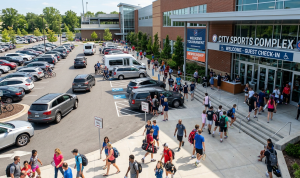
Common Mistakes in Warehouse Sports Facility Projects
Where Most Investors Get It Wrong
The most expensive mistakes happen early.
Assuming suitability without testing height, layout, or acoustics is a common issue.
Ignoring neighbour sensitivity or traffic impact creates planning risks.
Focusing only on design without understanding operations leads to poor outcomes.
These issues are avoidable—but only with proper feasibility testing.
UK Trends Driving Warehouse Sports Conversions
What Is Changing in 2026
Demand for experience-led sports facilities is increasing, particularly in urban and suburban areas.
Operators are looking for flexible, scalable spaces that can support multiple activities.
At the same time, planning scrutiny is increasing, and expectations around quality and impact are higher.
This creates a more selective environment where only well-considered schemes succeed.
How to Assess a Warehouse for Sports Conversion
A Practical Feasibility Checklist
Before committing to a site, key factors must be confirmed:
Does the height support the sport?
Can the layout work efficiently?
Are acoustics manageable?
Is access and parking sufficient?
Will planning support the use?
Does the operational model make sense?
These checks define whether a concept is viable.
How Muse Helps You Test Sports Facility Concepts
A Structured Concept Review
Muse works with landlords, investors, and operators to test whether a warehouse to sports facility conversion is credible before commitments are made.
This includes assessing planning, building suitability, operational flow, traffic impact, and commercial viability.
Why This Matters
Most development risk comes from early-stage decisions.
By testing both planning and operational viability upfront, Muse helps identify realistic opportunities and avoid unsuitable sites.
If you are also exploring residential-led strategies alongside leisure uses, our HMO planning guide in the UK provides useful insight into alternative planning routes
[Internal Link: /hmo-planning-guide]
For a broader understanding of how different commercial uses perform, our property investment strategies guide explains how to evaluate repositioning opportunities
[Internal Link: /property-investment-strategies]
To explore how these principles apply to your project, you can learn more about our approach at Muse Architects
Or if you are ready to move forward, you can contact our team directly here: Contact us.
Conclusion: Space Alone Is Not Enough
A warehouse can become a sports facility—but only under the right conditions.
Height, layout, acoustics, planning, and operations must all align.
Without that alignment, even a strong idea can fail.
With it, the right building can unlock significant long-term value.
Call to Action
Before committing to a warehouse to sports facility conversion, it is essential to understand whether the concept works in practice—not just in planning terms.
Ask us for a concept review—we will assess whether your building can support the sport, the operations, and the planning requirements before you commit to heads of terms.
Frequently Asked Questions About Warehouse to Sports Facility Conversion
Can a warehouse be converted into a sports facility in the UK?
Yes, but it depends on planning approval, building suitability, and operational feasibility. Not all warehouses are suitable for sports use.
What sports can be accommodated in warehouse conversions?
Common uses include padel courts, boxing gyms, martial arts studios, indoor football training, climbing facilities, and racket sports.
What building features are required for a sports facility conversion?
Key factors include sufficient ceiling height, clear spans, good acoustics, safe access, parking availability, and efficient internal layout.
Do I need planning permission for a warehouse sports facility?
Yes, most projects require a change of use application, particularly when moving from industrial to leisure use.
Why is ceiling height important in sports conversions?
Different sports require specific height clearances. For example, padel, climbing, and football training need significant vertical space.
How do acoustics affect warehouse sports facilities?
Sports uses generate noise, which can impact neighbouring properties. Poor acoustic control can lead to planning refusal or operational issues.