Muse Architects

Muse Architects - How National Planning Policy Framework Works

How National Planning Policy Framework Works

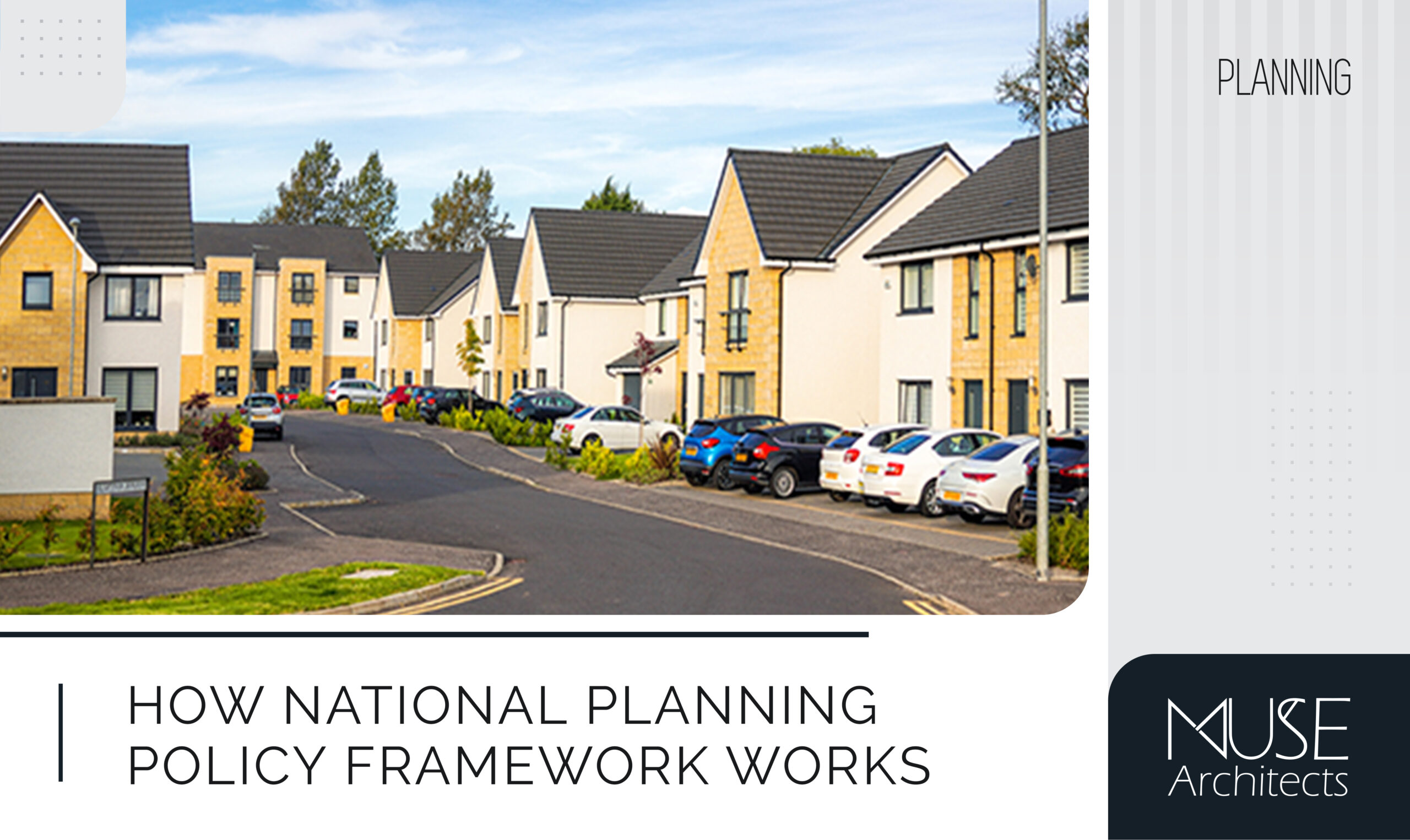
The Role of the National Planning Policy Framework (NPPF) in Sustainable Development Introduction The National Planning Policy Framework (NPPF) sets out the government’s policies for the economy, environment, and land use planning in England. Since its introduction in March 2012, it has replaced a range of planning policy statements and guidance. The NPPF ensures that decisions made in planning applications align with sustainable development principles. This essay explores the NPPF’s role in achieving sustainable development, its approach to local plans, and its impact on neighbourhood planning. Sustainable Development The NPPF affirms that the aim of the planning system is to contribute to sustainable development. Development projects that demonstrate sustainability should not face delays in approval. The framework promotes sustainability by reducing dependence on unsustainable structures and encouraging practices that foster a prosperous rural economy, a strong competitive economy, and sustainable transport. It also advocates for high-quality housing, the protection of green belt land, the promotion of healthy communities, sustainable mineral use, conservation of the historic environment, and proactive measures against climate change and flooding. Local Plans The NPPF mandates that local plans must align with its principles and policies, particularly the presumption in favour of sustainable development. Local plans should include strategic policies addressing job creation, housing needs, climate change mitigation, and infrastructure provision. These plans must be based on up-to-date and relevant data. Neighbourhood Planning According to the NPPF, neighbourhood plans should support the broader development strategy of the area. They should not promote less development or undermine strategic objectives. Instead, they should focus on reshaping development outside the main elements of local plans. Neighbourhood plans must adhere to national policy and guidance, ensuring they are generally consistent with the NPPF. Conclusion The NPPF plays a crucial role in ensuring that land use planning in England contributes to sustainable development. It outlines government policies on the economy, environment, and land use, promoting high-quality housing, green belt protection, and climate change action. It also requires local plans to be consistent with its principles and supports neighbourhood planning that aligns with the NPPF framework. Understanding the NPPF’s role is essential for effective property development and land use planning in England. How Muse Architects Can Help At Muse Architects, we recognise the critical role architects play in designing and developing buildings and spaces. We understand the importance of operating within the framework of the NPPF to achieve sustainable development. Our team is well-versed in the NPPF’s policies and principles. We ensure our designs comply with local and national planning regulations, conducting thorough research to understand the local planning context. This knowledge allows us to create buildings and spaces that align with local priorities. We believe architects have a responsibility to engage with local authorities and communities, ensuring our designs meet the needs of the people they serve. We consult with stakeholders and incorporate feedback into our proposals. Collaborating with other professionals, such as planners and engineers, ensures our designs are well-integrated within development projects. At Muse Architects, we are passionate about creating well-designed, sustainable buildings that meet community needs. Whether it’s a new build or a renovation, our architects are dedicated to delivering high-quality designs that exceed client expectations. If you are looking for architects in Manchester with a deep understanding of the NPPF’s policies, strong research and analytical skills, and the ability to collaborate effectively, contact Muse Architects today to learn more about our services and how we can help you achieve your development goals.
Flat Conversions

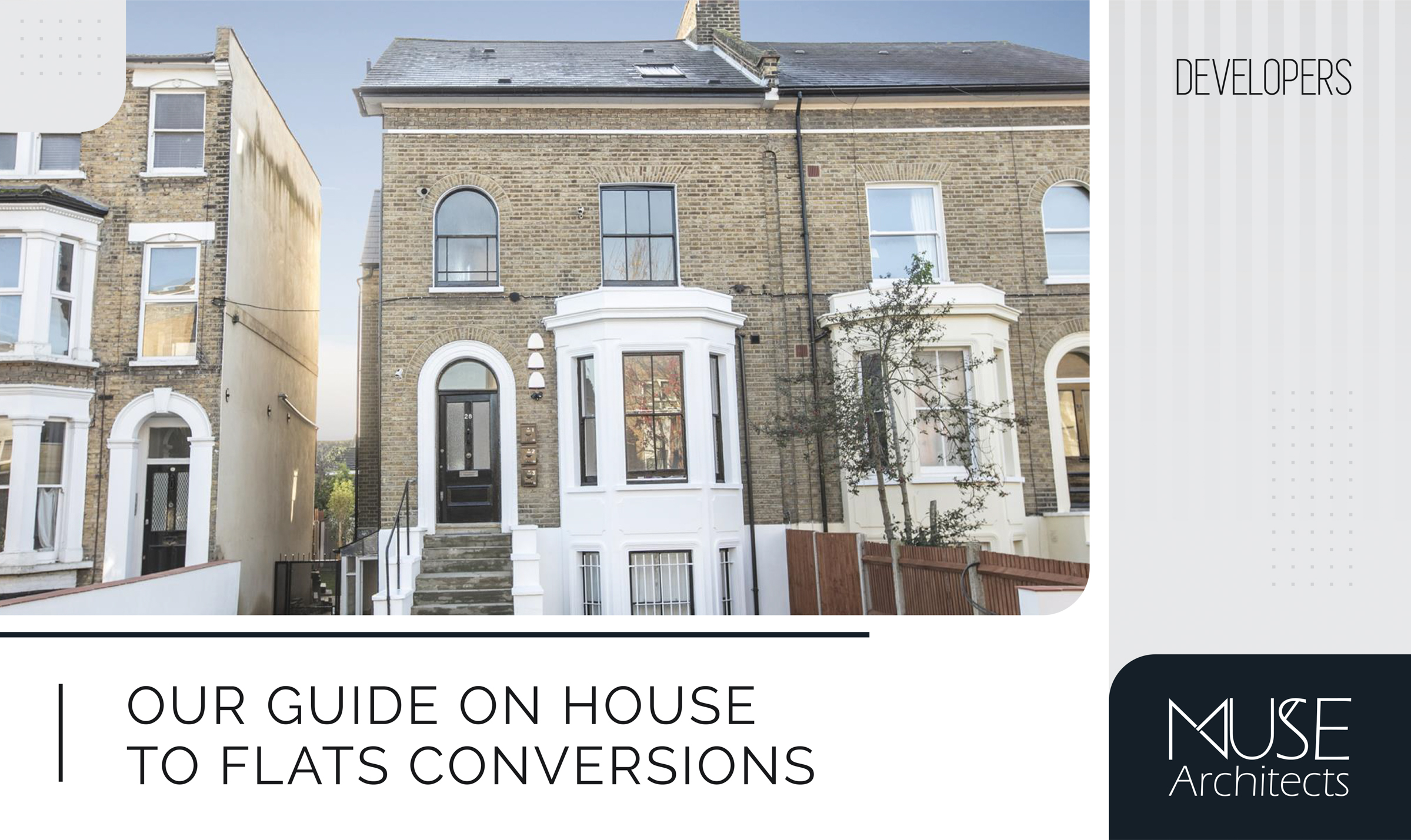
Our Guide on House to Flats Conversions

The Importance of Flat Conversions It is essential for property owners to make the best use of their buildings, ensuring that alterations and conversions are carried out to a high standard. In recent years, there has been a notable increase in individuals building houses and leasing them out. The housing sector has seen a significant rise in the number of investors, driven by the wealth and consistent income-generating potential it offers. Consequently, the housing sector has become one of the nation’s leading industries. However, the availability of rental space remains a limiting factor across the UK, which is where flat conversions come into play. Below, I will outline the importance of choosing a flat conversion. Importance of Flat Conversions As a landlord or landowner, converting your buildings into multiple flats can significantly increase your wealth. The recent popularity of rental markets is due to the high employment rate in the nation, leading to a rise in demand for flats. Despite the potential, many landlords find the process of converting their buildings into flats daunting. As professional architects and planning consultants, we have hands-on experience in flat conversions and can guide you through the process with our expertise in designing housing solutions. The number of flats you can create depends on the size of your land. Maximising your asset (house/land) can be daunting if you are not an experienced property developer. With our experience in property development and investment, we can help you properly maximise your asset and evaluate your land’s development potential, advising you on timescales and budget considerations. Securing Your Flat Conversions We have designed several intelligent templates for flat conversions that you can choose from. Our strategies for subdividing your house into different types of flats aim to achieve maximum use of your asset. Thanks to our extensive experience in flat conversion and property development, we understand what planning officers need to approve a flat conversion application. We are here to guide you through each phase of the often-daunting process of obtaining planning permission from local authorities. Designing the Layout of Your Ideal Flat Conversion We recognise that the flat conversion process can be cumbersome and are ready to assist you throughout. Our goal is to recommend the most beneficial use of space to create the maximum number of flats on your land, ensuring the best possible financial outcomes. As experts in architecture and planning, our design templates are crafted to produce attractive and functional flats that will appeal to high-paying tenants or buyers. We prioritise your needs when formulating and making decisions to ensure a successful flat conversion and development plan. Once we obtain planning permission from local authorities, we swiftly move into subsequent phases, including Technical Design and Building/Land regulation phases. This process is accompanied by constant monitoring of the construction projects by our site engineers and contracted administrators. Conclusion Our swift transition from one phase to another aims to turn your design concept into reality. Our team includes experienced civil engineers, surveyors, estate managers, and builders with proven expertise, allowing us to develop effective steps and a construction inspection approach to address any complications that may arise during your project. With us, you can feel confident that your flat conversions will become a beautiful reality within your budget. We pride ourselves on being professional yet friendly, always ready to assist with any challenges you might face while converting your buildings or land into multiple flats now or in the future. About Muse We are your Residential and Commercial Architects At Muse Architects, we offer a wide range of local architectural services to clients in Manchester and beyond. From building control in Manchester to office design project management, our team of experienced architects has the skills and expertise to handle any project. Whether you’re looking for commercial building architects or residential architects near you, we’re here to help. As local architects, we understand the unique challenges and opportunities of designing buildings in Manchester. We specialise in Manchester residential architect services and work closely with clients to create beautiful, functional spaces. Our 3D property visualisation services, including 3D visualisation for city planning and interior design, are designed to help you bring your vision to life. Contact us today to learn more about how Muse Architects can help you achieve your architectural goals.

planning process

Planning Permission – How long will it take?

Understanding the UK Planning Process and Housing Crisis If you’re wondering how long the planning process takes, here’s a quick answer: typically, it takes around 8 weeks for household applications with minor proposals, or about 13 weeks for medium developments. However, for large applications, especially those subject to an Environmental Impact Assessment or significant size, the timeline can extend to around 16 weeks. These are general guidelines; in practice, delays are common. The UK faces more serious planning challenges regarding housing than any other country. The housing crisis is not a short-term issue or merely a consequence of the financial crisis; it has persisted for over 45 years, leading to rapid increases in house prices—faster than any OECD country. This crisis has resulted in a significant and growing housing deficit, with 40% of newly built homes considered smaller than those in other densely populated European countries. In the Greater London Area (GLA), average prices have risen by £65,200 annually since March 2015. In recent years, capital gains for average London homeowners have surpassed those for renters, pushing lower-income individuals out of the city. This crisis has also led to a consistent decline in employment in inner London since 2011. While the UK planning office is working on solutions, the issues remain. In this post, I will outline the various challenges and the government’s ongoing solutions. The Flaws in the Current System The UK housing policy is constrained by three key factors: Development Control System: The UK operates a development control system that is inherently driven to limit development. Unlike the rule-based zoning system used in most of the world, any alteration or change of land use requires development control permission at the local level. This process is complicated by Section 106 agreements, which necessitate extensive negotiations between local authorities and architects. Inadequate Local Revenue: Local authorities receive insufficient revenue to support residential development. The situation is exacerbated by an equalisation system that offers little benefit to local authorities from permitting development while they bear the burden of local congestion. Restrictions Since 1947: Since the Town and Country Planning Act of 1947, residential development has been continuously constrained. Solutions in Progress to Combat the Housing Crisis Help to Buy Scheme: The government has initiated various Help to Buy schemes (HtB) to stimulate housing demand and generate new housing supply. However, these goals have not been met; housing prices rose by 25.8% between 2013 and 2014 following the first HtB launch. The supply of residential properties has failed to keep pace, and home ownership continues to decline. The HtB system places much of the risk on the government through guarantee schemes, while homebuyers bear the remaining risk. Tight Local Planning Constraints: The Barker Review (2003) highlighted that housing supply does not respond to shifts in demand. Increased earnings and population without corresponding construction lead to rising house prices. A study published in the Economic Journal by Wouter Vermeulen examined the impact of three local constraints on house prices: planning-induced, scarcity of developed land, and topographical constraints. The research indicated that between 1974 and 2008, house prices could have decreased significantly if these constraints were fully relaxed, with the scarcity of developed areas particularly affecting highly urbanised regions like the GLA. Benefits and Costs Analysis: The planning system impacts both benefits and costs. While there are substantial potential benefits in addressing market flaws, the UK planning system tends to prevent, preserve, and protect even in the absence of actual market failures, often overlooking the costs that may overshadow the benefits. Conclusion The UK planning process presents a complex mix of challenges and advantages. Unfortunately, the ongoing crisis currently outweighs the benefits of the planning system. While solutions are in place, they have not proven very effective. It is essential to recognise that this situation has developed over 45 years and will require significant time and effort to resolve fully. About Muse We are your Residential and Commercial Architects At Muse Architects, we offer a wide range of local architectural services to clients in Manchester and beyond. From building control in Manchester to office design project management, our team of experienced architects has the skills and expertise to handle any project. Whether you’re looking for commercial building architects or residential architects near you, we’re here to help. As local architects, we understand the unique challenges and opportunities of designing buildings in Manchester. We specialise in Manchester residential architect services and work closely with clients to create beautiful, functional spaces. Our 3D property visualisation services, including 3D visualisation for city planning and interior design, are designed to help you bring your vision to life. Contact us today to learn more about how Muse Architects can help you achieve your architectural goals.

Do I Need Planning Permission

Do I Need Planning Permission?

Navigating Planning Permission for Your Property Extension Obtaining planning permission to extend your property into your dream home can be frustrating, given the various procedures involved. Planning regulations are complex, and if not carefully understood, they can lead to pitfalls. It’s essential to know that you need planning permission for major architectural changes to your UK building, as well as for erecting new structures. Failure to secure the necessary planning permission can result in an enforcement notice, requiring you to remove any changes made. Understanding the ins and outs of planning permission and the types of changes it affects is crucial, although this can be daunting for many. In this post, I will outline the building projects that require a permit and how the process of obtaining one in the UK typically flows. Changes and Their Planning Permission Requirements Generally, significant changes to a building’s architecture will necessitate obtaining a permit. However, some major changes aimed at improving the building do not require permission. Below are common changes and their requirements: Extensions If you plan to add an extension to your home, this is usually considered permitted development. However, the extension must not cover more than half the land around the original house (curtilage) and must not exceed the height of the existing roof. Specifically, the extension shouldn’t be more than eight metres for a detached house and six metres for other houses above the rear wall. Additionally, the materials used should match the appearance of the existing house. Garages and Outbuildings Extensions to garages, sheds, greenhouses, and other outbuildings are generally considered permitted development. You can extend these structures without requesting planning permission, as long as the extension does not exceed four metres in height and does not cover more than half the land. Paving Over Garden You do not require planning permission for paving your garden, regardless of size, as long as non-porous materials are not used. However, if impermeable materials cover more than five square metres, planning permission will be needed. Doors and Windows Repairing or replacing windows or doors typically does not require planning permission. However, if your property is listed, you will need listed building approval and building control approval for window changes. External Walls and Roof Minor repairs or modifications to your walls and roof, such as painting or fixing a skylight, do not require planning permission. However, if you live in a conservation area or an area with significant vegetation, you will need permission to make changes. Wind Turbines and Solar Panels Temporary wind turbines do not require planning permission, but permanent installations do. The installation of solar panels generally does not require a permit. Fences, Gates, and Walls Extensions to fences, walls, or gates usually require planning permission, especially if changes are over one metre close to the road or two metres away from a boundary with a listed building. Trees and Hedges Trees and hedges are protected by tree preservation orders, meaning you will need permission to trim them, especially in conservation areas. However, you can reduce a hedge if it becomes a nuisance without needing permission. Indoors Most interior renovations, such as garage conversions, new staircases, bathrooms, kitchens, or rewiring, do not require planning permission. How to Get Planning Permission Planning permission can be a significant hurdle for homeowners. According to the Annual Homeowner Survey conducted in 2019, 27% (4.7 million people) experienced issues relating to planning permission while trying to renovate their homes. To avoid setbacks, consult a good planning advisor to understand local planning restrictions, targets, and priorities. They can help tailor your design to meet legal requirements. Alternatively, you can schedule an appointment with your local planning authority before submitting your application. Bring your proposal, including current floor plans and the proposed new design. During the meeting, seek feedback on your plan, ask about potential issues such as traffic and noise, and discuss site-specific matters like roads, footpaths, watercourses, sewers, and telephone lines. Conclusion Obtaining planning permission can be challenging, but by following the correct procedures, you can save yourself considerable trouble in the long run. Ensuring your planning drawings are accurate in scale and clearly demonstrate how the extension will affect its surroundings is crucial for a smooth approval process.

Select the fields to be shown. Others will be hidden. Drag and drop to rearrange the order.
  • Image
  • SKU
  • Rating
  • Price
  • Stock
  • Availability
  • Add to cart
  • Description
  • Content
  • Weight
  • Dimensions
  • Additional information
Click outside to hide the comparison bar
Compare