Muse Architects

Industrial Commercial architecture office Manchester

Convert Industrial Unit into Commercial Offices

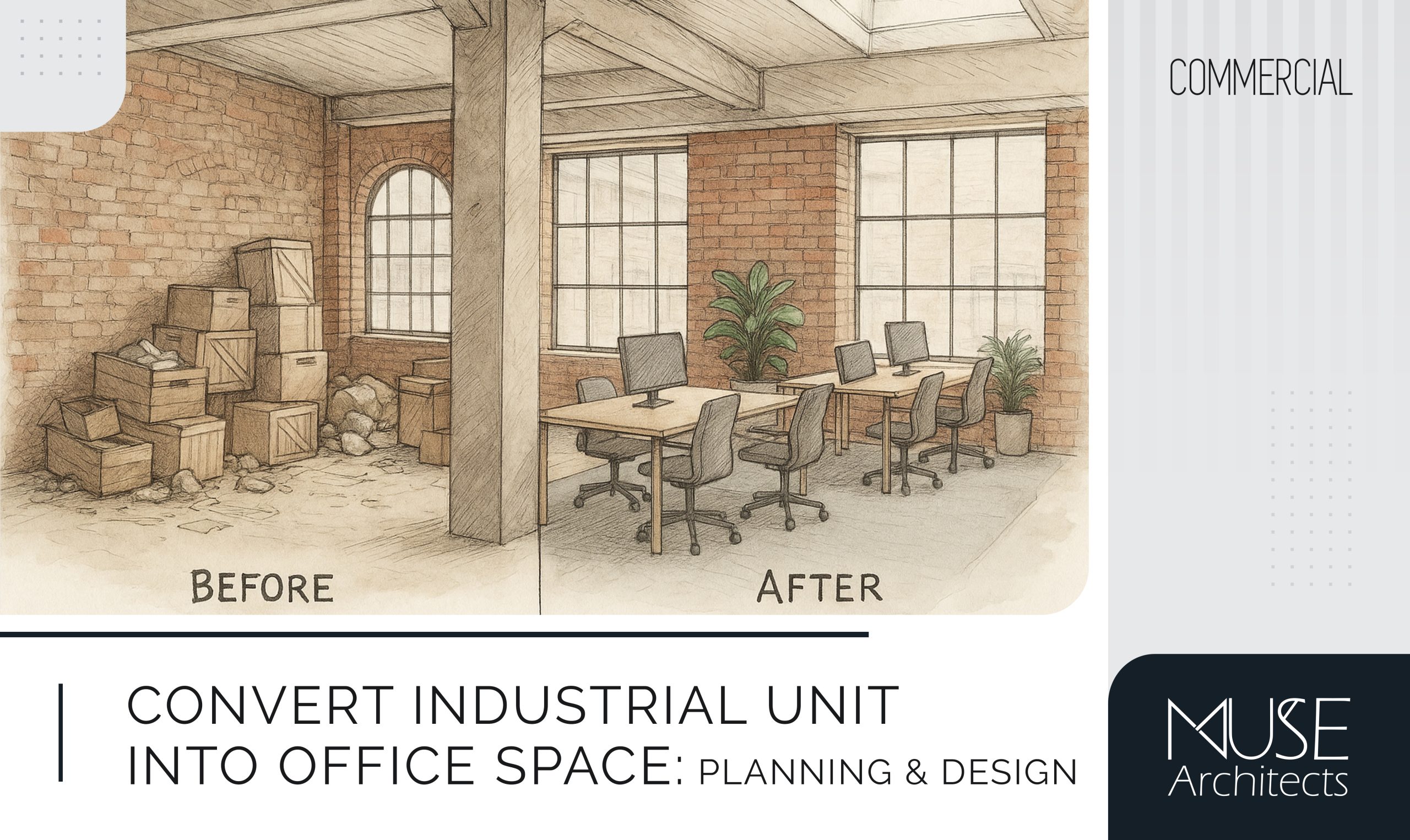
Summary The North West of England is witnessing renewed interest in converting older industrial and warehouse buildings into vibrant, sustainable, and modern office spaces. For businesses aiming to upskill their teams and create productive environments, these conversions offer a unique opportunity. This article outlines the architectural and planning approach required to transform such buildings, covering planning frameworks, sustainable design principles, material considerations, and how to optimise daylight and occupant wellbeing. Aimed at professionals and business leaders, it offers detailed insights while concluding with strategic recommendations for a successful conversion project. 1. Introduction: Why Industrial-to-Office Conversion Makes Strategic Sense As businesses adapt to hybrid work models and seek more sustainable practices, industrial-to-office conversions are gaining traction. These schemes revitalise underutilised assets, reduce embodied carbon compared to new builds, and allow businesses to configure spaces aligned with their operational and cultural needs. Architects play a central role in shaping these conversions, not just aesthetically, but in terms of regulatory compliance, spatial planning, and long-term usability. 2. Planning Context: UK Policy and North West Local Guidance 2.1 General Permitted Development Rights (GPDR) and Use Class Order The Use Class Order (amended 2020) merged offices (formerly B1) and light industrial (B1c) into Use Class E, which allows greater flexibility in planning. However, prior approval is still needed in many conversions under Permitted Development (PD), especially if significant external alterations are proposed. 2.2 Local Authority Planning in the North West Each local authority (e.g., Manchester, Liverpool, Stockport, Bolton) has its own local plan, sustainability targets, and urban regeneration priorities. Key planning considerations include: Parking and transport access Flood risk assessments (particularly in lower-lying industrial zones) Noise impact on adjacent residential properties Conservation or heritage overlays if the building or location is sensitive Engagement with planning officers early via a pre-application process is essential.   3. Architectural Considerations in Converting Industrial Units 3.1 Site Appraisal and Constraints An in-depth appraisal includes assessing: Structural integrity of steel or concrete frames Roof condition and insulation Eaves height and suitability for mezzanine insertions Natural daylight potential (rooflights, wall openings) Existing services infrastructure (power, water, HVAC) 3.2 Internal Space Planning Modern offices need to accommodate: Collaborative zones Quiet workstations Breakout areas Accessibility (DDA compliance) The original layout of an industrial unit is typically open plan, which gives architects freedom but also challenges in achieving acoustic comfort and thermal efficiency. 3.3 External Appearance and Streetscape Impact Retaining industrial character (e.g., exposed steel, loading bay doors) can enhance appeal. However, interventions like curtain walling, new glazing, and entrances must balance function with planning acceptability. 4. Daylight and Design for Wellbeing Daylight is a key challenge in converting deep-plan industrial buildings. Strategies include: Roof lanterns or sawtooth skylights Enlarged window openings, subject to planning Courtyards or lightwells if depth allows Daylight not only enhances wellbeing but reduces reliance on artificial lighting. Offices must meet minimum daylighting standards in the British Standard BS EN 17037, particularly where the converted space is expected to host long-stay desk workers. 5. Sustainable Design Strategies 5.1 Embodied Carbon and Retrofitting Benefits Adaptive reuse drastically lowers embodied carbon compared to demolition and rebuild. Retaining the frame and envelope where possible should be prioritised. 5.2 Operational Energy and Part L Compliance Thermal upgrades are essential to meet Part L (Conservation of Fuel and Power) of the Building Regulations: Insulated cladding upgrades High-performance glazing Efficient HVAC systems Air-tightness improvements Photovoltaic panels, battery storage, and heat pumps can further enhance energy profiles. 5.3 BREEAM and WELL Standards For companies pursuing accreditation, early design decisions are key to achieving BREEAM Excellent or WELL Gold ratings. Factors include: Indoor air quality monitoring Water efficiency Use of low-VOC materials 6. Materiality: Blending Industrial Heritage with Contemporary Use Material choices often determine the success of an industrial-to-office conversion. The approach should celebrate the building’s past while aligning with modern office aesthetics and performance needs. Recommended materials: Exposed brickwork: For warmth and texture Steel and timber composites: For visual contrast Reclaimed materials: For sustainability Modern cladding: In neutral tones to lift dated facades Acoustic panels, polished concrete floors, and natural timber finishes can create a modern yet grounded workspace. 7. Navigating Regulatory Compliance Besides planning and Part L, other key regulations include: Part M: Accessibility for all users Part B: Fire strategy, particularly in mezzanine additions or multi-tenanted layouts CDM Regulations 2015: Health and safety responsibilities from design stage onwards Asbestos Surveys: Crucial in older industrial buildings Early engagement with Building Control ensures regulatory pathways are clear and cost risks are minimised. 8. Going Back to the Office: Designing for Post-Pandemic Needs The office is no longer just a workplace; it’s a social hub, brand expression, and productivity enabler. As such, conversions should embrace: Flexibility for future layout changes Generous breakout areas Strong visual identity and biophilic elements Quiet pods and video call booths Mechanical ventilation and smart lighting systems are now baseline expectations. 9. Procurement and Construction Strategy Industrial-to-office conversions may uncover unforeseen challenges (e.g., slab levels, contamination). A flexible, phased procurement strategy helps mitigate risks. Design and Build: Speeds up delivery but may limit design control Traditional Contracting: Allows detail refinement but requires active project management Two-Stage Tendering: Useful in live environments or phased projects A Principal Designer must be appointed early under CDM. About Muse We are your Residential and Commercial Architects At Muse Architects, we offer a wide range of local architectural services to clients in Manchester and beyond. From building control in Manchester to office design project management, our team of experienced architects has the skills and expertise to handle any project. Whether you’re looking for commercial building architects, residential architects near you, or specialists in industrial conversions, we’re here to help. We specialise in residential and commercial new builds as well as industrial-to-office conversions. We work closely with clients to create beautiful, functional spaces tailored to their needs. Our 3D property visualisation services—including 3D visualisation for city planning and interior design—are designed to help bring your vision to life. Want to explore the potential of your existing site? Our architectural
Property Investment Strategies -Introduction

Property investment is a multifaceted journey, often perceived as complex and challenging. In the ever-evolving landscape of real estate, achieving success demands a keen focus on education, knowledge, mindset, and network. In this article, we will delve into the pivotal role these elements play in the world of property investment. We will also explore various strategies for property investment and discuss how Muse Architects, a distinguished firm specialising in high-end residential architecture and property development, can assist you on this journey.     The Foundation of Successful Property Investment Before we dive into the intricacies of property investment, let’s understand the foundational principles that underpin success in this field: education, knowledge, mindset, and networking.     Education Property investment is an ongoing learning process. Staying informed about market trends, property values, and investment strategies is crucial. Whether you’re a novice or an experienced investor, Muse Architects can provide valuable resources and insights to keep you informed about the latest developments in property investment. Knowledge Knowledge is the key to making informed decisions. Understanding the local property market, as well as the legal and financial aspects of property transactions, and emerging trends, is critical. Muse Architects can connect you with experts who possess the knowledge needed to ensure your investments are well-informed and sound. Mindset Successful property investors possess a mindset of patience, discipline, and a long-term perspective. It’s vital to be prepared for the ups and downs that come with property investment. At Muse Architects, we can help you develop the right mindset to navigate the challenges and reap the rewards of your investments. Networking Your network in the property investment world can open doors to opportunities and provide access to valuable resources. Muse Architects has an extensive network of industry professionals, including estate agents, mortgage brokers, contractors, and legal advisors, who can assist you in various aspects of property investment. Property Investment Strategies Now, let’s explore different property investment strategies and how Muse Architects can support you in each one: Buying Correctly One of the fundamental principles of property investment is purchasing the right property. This involves conducting thorough research, assessing the market, and identifying properties that are either undervalued or have the potential for growth. Muse Architects’ Expertise: Our team of professionals can provide comprehensive market research, assess property values, and identify opportunities for value addition. We can guide you in making well-informed decisions to set yourself up for success from the outset.     Capitalising on the Demand for Rental Properties Rental properties have seen a surge in demand in recent years due to factors such as the rising cost of living and the challenges faced by many in entering the property market. Muse Architects’ Expertise: We can assist you in optimising your rental properties. Our architectural expertise includes space optimisation, sustainable design, and ensuring legal and safety compliance. This helps you tap into the growing demand for rental properties and generate a reliable income stream. Treating Property Investment as a Business To succeed in property investment, it’s crucial to treat it as a business. This involves creating a clear strategy, setting goals, and developing a plan to achieve them. Muse Architects’ Expertise: We can help you develop a strategic plan for your property investment business. Whether you’re considering property refurbishment or development projects, our team can oversee the entire process, ensuring that your investments align with your business goals. Exploring Creative Financing Alternatives The property investment landscape is evolving, with cheaper and more creative financing alternatives becoming the new normal. These include rent-to-buy and lease options. Muse Architects’ Expertise: We can guide you through the financial aspects of these creative financing options. Our expertise in property valuation and legal guidance ensures that you make sound financial decisions, whether you’re considering a rent-to-buy option or a lease agreement. Stress-Testing the Market Stress-testing the property market is crucial to assess its stability and potential fluctuations. It helps ensure that your investments are sustainable and that you’re prepared for any market changes. Muse Architects’ Expertise: Our market insights and trend analysis can help you understand the current state of the property market and anticipate future developments. We can also assist in identifying potential risks and developing strategies to mitigate them. Seizing Opportunities in a Changing Landscape The property market is not static. Many landlords are retiring, and struggling homeowners are potential sources of opportunity for property investors. Muse Architects’ Expertise: We can assist you in seizing opportunities created by retiring landlords. We can help you identify properties likely to become available due to retiring landlords and negotiate favourable terms. Additionally, we can work with struggling homeowners, connecting you with resources and professionals who can assist them in finding solutions while helping you acquire properties at attractive prices. Ethical Investment Ethical investment is gaining importance in the property investment world. By investing ethically, you can ensure that your investments are sustainable and contribute to positive social and environmental outcomes. Muse Architects’ Expertise: Our commitment to sustainable and eco-friendly design principles can be leveraged in your property investments to promote positive environmental outcomes. We can also connect you with experts who can advise on community engagement and ethical property management practices.         Muse Architects: Your Partner in Property Investment Muse Architects is a distinguished firm specialising in high-end residential architecture and property development. Since our establishment in 2018, we have been dedicated to the design of home extensions, transformative projects, bespoke new builds, and small property developments for clients throughout Manchester and the wider North West region. As experienced architects, we focus on delivering design solutions that prioritise simplicity, abundant natural light, energy efficiency, sustainability, and, most significantly, the optimisation of space. For property developers like you, our commitment to space optimisation is of paramount importance. We understand that adding value to your property developments and investment schemes is a fundamental goal. Whether it’s through innovative designs, smart space utilisation, or sustainable practices, we aim to enhance the quality and value of your projects. The foundation of Muse Architects is built upon the expertise of our founder, Ben Richards. With a

top 12 cities for rentals

Top 12 Cities for Maximum Rental Yields in the UK

The UK property market remains a lucrative avenue for investors seeking rental income. In this comprehensive guide, we will explore the top 12 cities for property investment, considering average rental yields and recommended areas within each city. Investing in property mandates careful consideration of market trends, potential yields, and the unique characteristics of each city. Whether one prefers the vibrant atmosphere of Manchester or the historic charm of Edinburgh, these top 12 cities offer a spectrum of opportunities for property investors seeking optimal rental returns.  1. London Average Rental Yield: 2% to 4% Overview: London, the capital, boasts a diverse property market. While yields are relatively lower due to high property prices, certain areas offer steady returns. Recommended Areas: Islington: Known for its cultural diversity and proximity to central London, Islington can be an attractive option for investors. Greenwich: This historic area offers a blend of modern amenities and historical charm, potentially attracting tenants willing to pay a premium. 2. Bristol Average Rental Yield: 4% to 6% Overview: Bristol’s property market is characterized by moderate to good yields, making it an appealing choice for investors. Recommended Areas: Clifton: Renowned for its Georgian architecture, Clifton is a sought-after area with potential for steady rental income. Redland: With its vibrant community and proximity to the University of Bristol, Redland offers investment opportunities in student housing. 3. Southampton Average Rental Yield: 4% to 6% Overview: Southampton provides a stable property market with moderate to good rental yields. Recommended Areas: Ocean Village: This waterfront area appeals to professionals and offers potential for higher rental returns. Highfield: Home to the University of Southampton, Highfield can be a strategic location for student accommodation. 4. Cambridge Average Rental Yield: 2% to 4% Overview: Cambridge, known for its prestigious university, presents a market with lower rental yields due to high property values. Recommended Areas: Mill Road: A diverse and vibrant area, Mill Road may attract tenants looking for a mix of cultural experiences. Newnham: With its green spaces and proximity to the university, Newnham can be appealing for families and professionals.   5. Edinburgh Average Rental Yield: 4% to 6% Overview: Edinburgh offers a stable property market with moderate to good rental yields. Recommended Areas: Marchmont: Close to the city center and the University of Edinburgh, Marchmont is popular among students and professionals. Stockbridge: Known for its village-like atmosphere, Stockbridge appeals to a diverse range of tenants.   6. Cardiff Average Rental Yield: 4% to 6% Overview: Cardiff provides a stable property market with moderate to good rental yields. Recommended Areas: Cathays: A popular area for students due to its proximity to Cardiff University and affordable housing options. Pontcanna: Known for its parks and proximity to the city center, Pontcanna may attract professionals and families. 7. Manchester Average Rental Yield: 6% to 8% Overview: Manchester stands out with a robust property market and attractive rental yields, making it a hotspot for investors. Recommended Areas: Ancoats: This trendy area offers a mix of modern apartments and cultural attractions, appealing to young professionals. Salford Quays: With waterfront views and proximity to MediaCityUK, Salford Quays is a prime location for rental properties.   8. Birmingham Average Rental Yield: 5% to 7% Overview: Birmingham’s property market has seen consistent growth, providing investors with solid rental yields. Recommended Areas: Digbeth: Known for its arts and cultural scene, Digbeth attracts a diverse tenant demographic. Jewellery Quarter: A mix of historic charm and modern living, the Jewellery Quarter is a sought-after area for professionals. 9. Glasgow Average Rental Yield: 5% to 7% Overview: Glasgow offers a stable property market with moderate to good rental yields. Recommended Areas: West End: Home to the University of Glasgow, the West End is popular among students and professionals. Merchant City: With its vibrant atmosphere and cultural attractions, Merchant City appeals to a diverse range of tenants. 10. Leeds Average Rental Yield: 5% to 7% Overview: Leeds has emerged as a strong contender in the property market, offering investors competitive rental yields. Recommended Areas: Headingley: A popular choice for students and young professionals, Headingley provides affordable housing options. Roundhay: Known for its green spaces and family-friendly environment, Roundhay is attractive to professionals and families. 11. Nottingham Average Rental Yield: 5% to 7% Overview: Nottingham’s property market offers a balance between affordability and rental returns. Recommended Areas: Lenton: With its proximity to the University of Nottingham, Lenton is ideal for student accommodation. Mapperley: A residential area with good transport links, Mapperley appeals to a mix of tenants. 12. Newcastle Average Rental Yield: 6% to 8% Overview: Newcastle provides a robust property market with attractive rental yields. Recommended Areas: Jesmond: A popular choice for students and young professionals, Jesmond offers a vibrant living experience. Ouseburn: Known for its cultural scene and regeneration, Ouseburn attracts a diverse tenant base. Conclusion Investing in property requires careful consideration of market trends, potential yields, and the unique characteristics of each city. Whether you prefer the vibrant atmosphere of Manchester or the historic charm of Edinburgh, these top 12 cities offer a range of opportunities for property investors seeking optimal rental returns. Conduct thorough research, stay informed about local developments, and leverage the expertise of real estate professionals to make the most informed investment decisions. Happy investing! Conclusion: Elevating Investments with Muse Architects Across UK Cities As we traverse the landscape of the UK’s property market, it becomes abundantly clear that investing in real estate is not just a financial decision but a strategic move towards securing a prosperous future. In this nuanced investment environment, Muse Architects, headquartered in Manchester, emerges as the discerning partner for individuals seeking to navigate the intricacies of property ventures across diverse cities. The cities identified in this guide represent not merely locations but thriving hubs with distinctive characteristics. A strategic investment approach necessitates not only understanding the current market dynamics but also envisioning the future trajectory. The selection of these cities is rooted in a meticulous analysis of factors such as rental yields, affordability, and growth projections. As a reputable

architect to developer

From Architecture to Property Development

Embarking on a Career Transition Embarking on a career in architecture paved the way for my eventual transition into the dynamic realm of real estate development. Shifting from envisioning structures to actualising them marked a significant and rewarding evolution in my professional trajectory. Exploring Lucrative Opportunities in Property Development Unlike the comparatively rigid salary structures in architecture, real estate development unveiled a realm of limitless financial potential. In this field, earnings are intricately linked to the successful execution of projects, transcending the income limitations often inherent in traditional architectural roles. This realisation sparked the consideration of real estate development as a means to not only elevate my career but also to enhance my financial prospects. Navigating the Transition The journey from architecture to real estate development is undoubtedly transformative, demanding a strategic approach. Here are key steps that proved instrumental in my own transition, offering guidance for fellow architects aspiring to venture into property development: Leveraging Architectural Knowledge You can use your architectural expertise as a foundational advantage. Understanding the planning application process, building regulations, and design principles gives you a unique edge in conceptualising and executing outstanding building projects. Market Research and Specialisation Conduct thorough market research to identify trends, demands, and opportunities. Specialise in niches where your architectural background aligns seamlessly, ensuring a targeted and strategic entry into property development. Financial Literacy and Risk Management Develop a strong grasp of financial principles and risk management. Real estate development involves financial intricacies that extend beyond architectural considerations. A sound understanding of budgets, financing, and risk mitigation is essential. Educational Foundations for Property Development In the specific context of property development, educational foundations play a pivotal role. Rather than venturing into unrelated business and property management realms, focus on strategic education tailored to your evolving role: Strategic Education Investment Explore academic programs that bridge the knowledge gap between architecture and property development. Courses in project management, real estate finance, and development strategies can enrich your skill set and enhance credibility. Continual Learning in Development Practices Stay informed about industry-specific developments, legal requirements, and emerging trends within property development. Participation in courses, workshops, and seminars dedicated to real estate development ensures ongoing relevance and adaptability. Building Networks and Practical Approaches Networking and practical experience are indispensable components in the journey from architect to property developer: Networking within the Industry Leverage existing architectural connections and actively seek new ones within the property development sector. Attend industry events, engage with professionals, and build a network that provides valuable insights and potential collaborations. Practical Experience from Ground Up Embrace entry-level opportunities that allow for hands-on experience in property development. Practical exposure at the grassroots level, even with prior architectural expertise, is integral for long-term success. Commitment to Continuous Growth In the dynamic landscape of property development, commitment to continuous learning remains key: Adaptation and Skill Enhancement Commit to ongoing skill enhancement and adaptability. As the industry evolves, staying informed about emerging technologies, market shifts, and sustainable practices is crucial. Engagement in Industry Forums Participate actively in industry forums, webinars, and relevant professional associations. This engagement fosters a deeper understanding of industry dynamics and facilitates valuable connections. Conclusion: Flourishing in Property Development In conclusion, the transition from architecture to property development is a strategic move that requires leveraging architectural knowledge, strategic education, building robust networks, and practical experience. By staying committed to continuous learning and growth, architects can position themselves for success in the dynamic and rewarding field of property development, creating not only structures but thriving environments.

Navigating the 2024 Planning Reforms in the UK

Navigating the 2024 Planning Reforms: Implications for Architects and Urban Development In the ever-evolving landscape of architecture and urban development, staying attuned to regulatory shifts is paramount. The United Kingdom is set to witness a transformative wave in 2024, with a suite of planning reforms designed to reshape the architectural canvas. Let’s delve into the intricacies of these changes and their profound implications for architects, builders, and city planners. 1. Levelling Up Bill: Streamlining the Planning Odyssey The Levelling Up and Regeneration Bill aims to revitalise the planning application process. Recognising the system’s inefficiencies, Housing Secretary Michael Gove has committed to a more focused and expeditious planning journey. The goal is to achieve adoption within 30 months through reduced evidence requirements and an earlier emphasis on planning. Among the notable provisions, every local planning authority is mandated to create a design code, serving as a visual narrative for its domain. This code, integrated into either the local plan or a supplementary plan, is envisioned as a catalyst for cohesive, aesthetically pleasing urban development. 2. Empowering Communities: The Rise of ‘Street Votes’ A groundbreaking inclusion in the Bill is the ‘street vote’ powers, which empower residents to propose and execute property redevelopment plans based on their design preferences. This marks a paradigm shift, granting local communities the authority to shape their development guidelines, fostering a sense of ownership and communal identity. 3. National Housing Targets, Green Belt Protections, and Brownfield Prioritisation The Levelling Up Bill preserves national housing targets while introducing new flexibilities to accommodate local circumstances. A noteworthy commitment is the strengthened protection of Green Belt areas, although specific mechanisms remain undisclosed. Additionally, brownfield land takes centre stage, with a dedicated government review exploring its optimal utilisation. 4. The Sunset of the ‘Four-Year Rule’: Welcoming the 10-Year Epoch In a significant change, the ‘four-year rule’—which allows homes to remain without planning permission after four years—is being replaced by a more expansive 10-year rule. This provides a broader timeframe for compliance. 5. Infrastructure Levy: A New Chapter in Funding Urban Development The introduction of a new Infrastructure Levy, designed to replace Section 106, marks a significant departure. Local authorities will have the authority to set varying levy rates based on geographical nuances, potentially reducing rates on brownfield land and fostering renewed interest in its development. 6. Neighbourhood Plans Reinvented Neighbourhood plans, vital for community involvement, will be fortified. Plans integrated into broader local authority development for five years will gain enhanced strength, amplifying community roles in shaping their locales. 7. Enforcement Action and Community Collaboration The Bill proposes a novel approach, allowing applications to be refused in their current state while offering a two-month pause on enforcement action. This respite enables applicants to compile necessary documents and resubmit applications more effectively. 8. A Revised National Planning Policy Framework (NPPF) The Levelling Up Bill will trigger revisions in the National Planning Policy Framework (NPPF). Among the changes are a 35% increase in planning fees for major applications and a 25% hike for minor applications. Homeowners will now be required to seek planning permission for short-term holiday lets, ushering in a new era of regulatory oversight. Conclusion: Forging a New Architectural Frontier As architects and urban visionaries, these unfolding changes invite us to adapt, innovate, and collaborate. The 2024 planning reforms represent more than a legal evolution; they signify a collective opportunity to shape resilient, vibrant, and community-centric urban landscapes. Challenges on the Horizon: Navigating Disadvantages However, every paradigm shift brings challenges. The alterations in planning regulations, while progressive, may present hurdles in execution. Increased planning fees could strain budgets, and the balance between national targets and local flexibilities will require adept navigation. Muse Architects: Your Guiding Constellation In the dynamic landscape of 2024’s architectural and regulatory challenges, Muse Architects serves as your guiding constellation. Our seasoned team is equipped with profound insights to navigate complexities, from deciphering design codes to optimising infrastructure levies. Collaborate with Muse Architects, where innovation meets regulation, to sculpt a future where architectural brilliance seamlessly intertwines with regulatory pragmatism. Recognising the complexities and opportunities presented by these changes, Muse Architects is committed to guiding you through this transformative period. Our team, well-versed in the evolving regulatory landscape, is ready to collaborate with you, turning challenges into opportunities. For any questions or further clarification, feel free to reach out. We highly value our partnership and look forward to continuing our journey together, shaping the future of UK architecture.

Energy Efficient Homes

10 Energy-Efficient Upgrades For Your Home

10 Energy-Efficient Home Upgrades to Save Money and Reduce Your Carbon Footprint If you’re a homeowner, you may be seeking ways to save money on your energy bills while also making your home more comfortable. Fortunately, there are many steps you can take to improve the energy efficiency of your home, whether you live in an older house or a newer one. Here are some tips to get started: 1. Conduct an Energy Audit Before making changes, it’s a good idea to assess how your home currently uses energy. You can do this by hiring a professional energy auditor or using a DIY kit to test for leaks, insulation levels, and other factors affecting energy efficiency. Once you identify where your home is losing energy, you can start making targeted improvements. 2. Insulate Your Home One of the biggest energy drains in many homes is inadequate insulation. If your home is poorly insulated, you’re likely losing heat in the winter and cool air in the summer, causing your HVAC system to work harder and driving up your energy bills. Consider adding insulation to your attic, walls, and floors to improve your home’s energy efficiency. 3. Upgrade to Energy-Efficient Windows and Doors Older windows and doors can be a major source of energy loss. If they are drafty or poorly sealed, you may be losing heat or cool air without realising it. Upgrading to energy-efficient windows and doors can help keep your home comfortable while saving you money on energy bills. 4. Install a Programmable Thermostat A programmable thermostat allows you to set your home’s temperature according to your schedule, helping you save money by reducing energy usage when you’re away or asleep. Some models can even learn your habits and adjust the temperature automatically. 5. Switch to Energy-Efficient Lighting Saving energy and money can also be achieved by switching to energy-efficient lighting, such as LED bulbs. These bulbs use less energy than traditional incandescent bulbs and last much longer, saving you money on replacements over time. 6. Seal Air Leaks Air leaks around windows, doors, and other areas can cause your HVAC system to work harder and use more energy. Seal these leaks with weatherstripping, caulking, or other materials to improve your home’s energy efficiency. 7. Upgrade Your Appliances Older appliances can consume a lot of energy, so consider upgrading to energy-efficient models that use less energy and water. Look for appliances with certified energy labels, indicating they meet strict energy efficiency guidelines set by reputable organisations in the UK. 8. Install Solar Panels For a comprehensive way to save energy and reduce your carbon footprint, consider installing solar panels on your home. Solar panels generate electricity from sunlight, helping you save on energy bills while reducing reliance on fossil fuels. Many reputable UK companies offer solar panel installation services, and government incentives may be available to support your transition to renewable energy. 9. Use a Smart Power Strip Many electronics and appliances continue to use energy even when turned off, known as standby power. You can reduce this usage by using a smart power strip, which automatically turns off electronics when they’re not in use. Look for power strips that comply with UK standards and have features tailored to the local electrical system. 10. Plant Trees and Shrubs Consider planting trees and shrubs around your home to provide shade in summer and insulation in winter. This can help reduce your reliance on heating and cooling, saving you money on energy bills. While air conditioning may not be as prevalent in the UK, natural shading can contribute to a more comfortable living environment. Conclusion There are many ways to make your home more energy-efficient and save money on energy bills in the UK. By conducting an energy audit, upgrading to energy-efficient windows and appliances, and installing solar panels, you can reduce your carbon footprint while enjoying a more comfortable and affordable home. How Muse Architects Can Help Muse Architects can assist homeowners in achieving energy-efficient upgrades and reducing their carbon footprint through sustainable design solutions. As a full-service architecture firm, we can conduct energy audits to identify areas where homeowners are losing energy and suggest targeted improvements. Additionally, we can help select energy-efficient windows and doors, design and install solar panels, and integrate energy-efficient lighting and appliances. Our team can also design homes that are inherently energy-efficient, incorporating features such as passive solar design, insulation, and ventilation systems. By working with Muse Architects, homeowners can save money on energy bills, reduce their carbon footprint, and enjoy a more comfortable and sustainable home tailored to the UK environment.

architects role in property develepment

The Architect’s Role in Property Development

Navigating the Architect’s Role in Property Development: A Guide to Client Understanding A property developer acknowledges that success hinges significantly on collaborating with a skilled architect. In this symbiotic relationship, an architect’s responsibilities extend beyond merely designing buildings. The architect’s role encompasses various tasks, including collating designs from multiple consultants, facilitating the planning process, and overseeing construction activities. When aligned with a developer, the architect becomes an integral part of the project team, contributing to site selection, design and planning, budget management, team selection, and even interior and landscape design. Essentially, the architect is entrusted with adding substantial value to the project by crafting designs that resonate with the target audience and align with the developer’s objectives. Architect’s Planning Role for Developers The architect plays a pivotal role in development planning, initiating projects by crafting meticulous plans and designs. They navigate regulatory compliance, submit planning applications, and engage with local authorities to ensure swift approvals. The architect adapts designs based on feedback, negotiates for project support, and employs visual representations to convey project merits. Collaborating with consultants, they monitor the process, compile comprehensive documentation, and serve as the project’s ambassador, laying the groundwork for successful construction. Team Curation Ensuring that a proficient project team is in place involves hiring experienced civil, geotechnical, and structural engineers. Design Implementation and Construction Oversight Architects are responsible for implementing the approved design and overseeing the construction phase. The Significance of an Architect to a Developer Cost-Effective Realisation: Architects help developers achieve their goals in a cost-effective manner. Project Management Expertise: They contribute to effective project planning, supervision, and management, mitigating risks that could lead to project failure. Timely Delivery: Developers rely on architects for their experience in the building process to ensure projects are delivered on time. Team Assembly Skills: Architects excel in forming a skilled and experienced project team, which is crucial for project success. Understanding Developer Goals: They comprehend the needs and aspirations of developers, translating them into projects that are not only aesthetically pleasing but also aligned with the developer’s vision. Value Addition: Architects consider factors that might be overlooked by developers, consistently striving to enhance the overall value of the project. Regulatory Compliance: Developers require architects to prepare building plans and specifications for submission to local planning authorities, ensuring compliance and securing necessary permissions. Tips for Architects Working with Developers Effective collaboration between architects and developers relies on clear communication and understanding. Here are some valuable tips for architects when working with developers: Clarify Service Expectations: Ensure a clear understanding of the services expected from the architect by the developer. Agree on Fees: Collaboratively decide on a fee structure for the architect’s services. Foster Open Communication: Cultivate an environment of open communication, encouraging developers to ask questions and architects to provide informative answers. Professional Reference Sharing: Provide the developer with a comprehensive list of past projects and clients, establishing professional credibility and references. Architectural Qualification: Membership in the national institute for architects signifies architectural licensure and qualification. Site Familiarity: Visit the project site before initiating the design process, taking note of its current condition. Understand Planning Requirements: Visit local planning authorities or councils to understand planning requirements before initiating the building plan. In Conclusion Working as an architect for a property developer can become a seamless and fruitful experience when expectations are clear and collaboration is fostered. By adhering to the outlined tips and understanding the uniqueness of each project and client, architects can not only excel in their role but also cultivate robust and harmonious professional relationships with developers. The key lies in comprehending and responding to the distinct needs of every project, ensuring that each design reflects the aspirations of the developer and resonates with the targeted audience.

Elevating Your Property with Building Regulation Compliant House Design Plans

An In-Depth Examination of Building Regulation Drawing Plans Within the realm of property development, unwavering adherence to building regulations stands as the fundamental pillar of any construction or renovation endeavour. This commitment ensures that your property embodies safety, functionality, and legal compliance. In this comprehensive exploration, we will delve into the intricacies of building regulation plans, elucidating their paramount significance in the realm of planning permission. Furthermore, we will highlight Muse Architects, a distinguished architectural firm renowned for their meticulous craftsmanship in creating building regulation-compliant house design plans in the United Kingdom. Unveiling the Essence of Building Regulations in House Design Plans Building regulations in the United Kingdom serve as the bedrock of standards governing the construction and alteration of buildings. These regulations protect and ensure that properties are secure, structurally sound, energy-efficient, and universally accessible. At the heart of these regulations lie the house design plans—comprehensive documents and drawings that delineate the blueprint for construction or renovation. These plans, often referred to as building regulation plans for extensions, serve as the tangible manifestation of your project’s compliance with the intricate tapestry of building regulations. Within these meticulously conceived plans, one can find a symphony of architectural drawings, structural calculations, and an array of technical details. These elements converge to demonstrate the project’s alignment with the exacting safety and quality standards prescribed by building regulations. Muse Architects: Exemplars of Architectural Excellence and Regulatory Adherence In the pantheon of architectural brilliance, Muse Architects emerges as a leader in creating building regulation-compliant house design plans. Their prowess spans the entire spectrum of architectural design, ensuring that projects not only comply with regulations but also resonate with aesthetic magnificence. Here are several reasons why Muse Architects excels in crafting house design plans that transcend mere compliance: Architectural Prowess: Muse Architects possesses a wealth of experience and expertise, creating homes that are not only secure but also visually captivating. Regulatory Acumen: With a profound understanding of building regulations in the UK, Muse Architects meticulously curate plans that epitomise compliance, leaving no room for errors. Bespoke Elegance: They recognise the uniqueness of each property, tailoring their designs to meet specific needs and individual nuances. Efficiency and Sustainability: Muse Architects champions energy efficiency and sustainability, incorporating environmentally friendly elements into their designs. Meticulous Craftsmanship: Every detail, from layout to structural integrity, is carefully considered and calibrated to perfection. Navigating the Process of Crafting and Submitting Building Regulation-Compliant House Design Plans Creating and submitting house design plans that adhere to building regulations is a pivotal juncture in property development. These plans illuminate the path to compliance and excellence. Let’s explore the steps involved in this process: Preliminary Consultation: The journey begins with an initial consultation with Muse Architects. Here, the intricacies of your project and the requirements for compliance are thoroughly discussed. Artisanal Design: Muse Architects will meticulously create house design plans that harmonise your vision with the demands of regulatory compliance, incorporating architectural drawings and structural calculations. Submission and Regulatory Guidance: Muse Architects will navigate the submission process to ensure your plans align with local building control authorities’ standards. With approval secured, the project can confidently proceed. Construction and Inspectorial Scrutiny: During construction, building control inspectors may visit the site. Muse Architects will provide support to ensure the project progresses smoothly. Certification of Completion: Upon successful inspection, your project will receive final certification, affirming compliance with building regulations. The Fundamental Role of Building Regulations Building regulations play a crucial role in property development. They are designed to: Safeguard Lives: Ensuring the safety of occupants is paramount, establishing the secure and structurally sound nature of buildings. Uphold Quality: These regulations set exacting standards for construction quality, materials, and design. Champion Energy Efficiency: Many regulations aim to reduce the carbon footprint of buildings, leading to cost savings on energy. Ensure Legal Compliance: Violations can result in substantial penalties and necessitate rectifications. Approved plans protect against legal ramifications. The Synergy between Planning Permission and Building Regulations While planning permission and building regulations are intertwined in property development, they serve distinct roles. Planning permission focuses on land use, aesthetics, and environmental impact, while building regulations concentrate on structural and safety aspects. Compliance with both ensures that properties are not only visually appealing but also safe and effectively constructed. The Imperative of Building Regulation-Compliant House Design Plans Creating house design plans that adhere to building regulations is essential in any property development initiative. These plans represent the architectural blueprint that ensures compliance with the rigorous standards in the UK. Their importance can be summarised as follows: Safety: Ensuring the safety of inhabitants and visitors is the core principle of building regulations. Quality Assurance: Adhering to regulations assures the quality of construction, materials, and design. Energy Efficiency: Compliance fosters energy efficiency, resulting in cost savings and sustainability. Legal Obligations: Building regulations are legally binding; non-compliance can lead to penalties and costly delays. Longevity: Properties built in compliance with regulations exhibit greater durability and require less frequent repairs. Enhanced Resale Value: Compliance can increase property resale value, as buyers often prefer homes that are safe and well-constructed. Conclusion Building regulations form the bedrock of successful property development projects, ensuring safety, quality, and sustainability. House design plans that meticulously adhere to these regulations represent the foundation for achieving these objectives. Muse Architects, with their profound understanding of building regulations and commitment to architectural excellence, infuse innovation and meticulous attention to detail into every project. Choosing Muse Architects as your partner in property development means exceeding building regulations and achieving exceptional design. Whether you are considering an extension, new construction, or renovation, trust Muse Architects to craft building regulation-compliant house design plans that elevate your property to unparalleled heights of compliance and excellence.

Property Investment Strategies

Property Investment Strategies -Introduction Property investment is a multifaceted journey, often perceived as complex and challenging. In the ever-evolving landscape of real estate, achieving success demands a keen focus on education, knowledge, mindset, and network. In this article, we will delve into the pivotal role these elements play in the world of property investment. We will also explore various strategies for property investment and discuss how Muse Architects, a distinguished firm specialising in high-end residential architecture and property development, can assist you on this journey. The Foundation of Successful Property Investment Before we dive into the intricacies of property investment, let’s understand the foundational principles that underpin success in this field: education, knowledge, mindset, and networking. Education Property investment is an ongoing learning process. Staying informed about market trends, property values, and investment strategies is crucial. Whether you’re a novice or an experienced investor, Muse Architects can provide valuable resources and insights to keep you informed about the latest developments in property investment. Knowledge Knowledge is the key to making informed decisions. Understanding the local property market, as well as the legal and financial aspects of property transactions, and emerging trends, is critical. Muse Architects can connect you with experts who possess the knowledge needed to ensure your investments are well-informed and sound. Mindset Successful property investors possess a mindset of patience, discipline, and a long-term perspective. It’s vital to be prepared for the ups and downs that come with property investment. At Muse Architects, we can help you develop the right mindset to navigate the challenges and reap the rewards of your investments. Networking Your network in the property investment world can open doors to opportunities and provide access to valuable resources. Muse Architects has an extensive network of industry professionals, including estate agents, mortgage brokers, contractors, and legal advisors, who can assist you in various aspects of property investment. Property Investment Strategies Now, let’s explore different property investment strategies and how Muse Architects can support you in each one: Buying Correctly One of the fundamental principles of property investment is purchasing the right property. This involves conducting thorough research, assessing the market, and identifying properties that are either undervalued or have the potential for growth. Muse Architects’ Expertise: Our team of professionals can provide comprehensive market research, assess property values, and identify opportunities for value addition. We can guide you in making well-informed decisions to set yourself up for success from the outset. Capitalising on the Demand for Rental Properties Rental properties have seen a surge in demand in recent years due to factors such as the rising cost of living and the challenges faced by many in entering the property market. Muse Architects’ Expertise: We can assist you in optimising your rental properties. Our architectural expertise includes space optimisation, sustainable design, and ensuring legal and safety compliance. This helps you tap into the growing demand for rental properties and generate a reliable income stream. Treating Property Investment as a Business To succeed in property investment, it’s crucial to treat it as a business. This involves creating a clear strategy, setting goals, and developing a plan to achieve them. Muse Architects’ Expertise: We can help you develop a strategic plan for your property investment business. Whether you’re considering property refurbishment or development projects, our team can oversee the entire process, ensuring that your investments align with your business goals. Exploring Creative Financing Alternatives The property investment landscape is evolving, with cheaper and more creative financing alternatives becoming the new normal. These include rent-to-buy and lease options. Muse Architects’ Expertise: We can guide you through the financial aspects of these creative financing options. Our expertise in property valuation and legal guidance ensures that you make sound financial decisions, whether you’re considering a rent-to-buy option or a lease agreement. Stress-Testing the Market Stress-testing the property market is crucial to assess its stability and potential fluctuations. It helps ensure that your investments are sustainable and that you’re prepared for any market changes. Muse Architects’ Expertise: Our market insights and trend analysis can help you understand the current state of the property market and anticipate future developments. We can also assist in identifying potential risks and developing strategies to mitigate them. Seizing Opportunities in a Changing Landscape The property market is not static. Many landlords are retiring, and struggling homeowners are potential sources of opportunity for property investors. Muse Architects’ Expertise: We can assist you in seizing opportunities created by retiring landlords. We can help you identify properties likely to become available due to retiring landlords and negotiate favourable terms. Additionally, we can work with struggling homeowners, connecting you with resources and professionals who can assist them in finding solutions while helping you acquire properties at attractive prices. Ethical Investment Ethical investment is gaining importance in the property investment world. By investing ethically, you can ensure that your investments are sustainable and contribute to positive social and environmental outcomes. Muse Architects’ Expertise: Our commitment to sustainable and eco-friendly design principles can be leveraged in your property investments to promote positive environmental outcomes. We can also connect you with experts who can advise on community engagement and ethical property management practices. Muse Architects: Your Partner in Property Investment Muse Architects is a distinguished firm specialising in high-end residential architecture and property development. Since our establishment in 2018, we have been dedicated to the design of home extensions, transformative projects, bespoke new builds, and small property developments for clients throughout Manchester and the wider North West region. As experienced architects, we focus on delivering design solutions that prioritise simplicity, abundant natural light, energy efficiency, sustainability, and, most significantly, the optimisation of space. For property developers like you, our commitment to space optimisation is of paramount importance. We understand that adding value to your property developments and investment schemes is a fundamental goal. Whether it’s through innovative designs, smart space utilisation, or sustainable practices, we aim to enhance the quality and value of your projects. The foundation of Muse Architects is built upon the

Unlocking Architectural Excellence: Your Guide to Choosing the Right Architect in Manchester

Here at Muse Architects We understand that a home is more than just a structure; it’s a place where your life unfolds. Whether you’re envisioning a room transformation or planning a comprehensive remodel, we believe that an architect can be an invaluable partner to help you achieve your home goals. Let us guide you through the process of hiring and working with an architect to make your dreams a reality. Understanding the Need for an Architect Life is ever-changing, and your home should adapt to meet your evolving needs. Perhaps your family is growing, and you need extra space, or your home business has outgrown your kitchen table. It could be that you want to accommodate an elderly relative who faces mobility challenges. Whatever the reason, our lives change, but our homes remain static. To ensure your home keeps pace with your life, you’ll likely consider remodelling. Home remodelling, whether it involves adding a new bathroom, expanding your kitchen, or embarking on a substantial house extension, often entails financial investment, meticulous planning, and sometimes a fair share of stress. It can raise numerous questions beyond design choices, such as whether or not you should hire an architect. In a world where DIY projects are celebrated, hiring an architect might be seen as a luxury, and it may seem costly. It’s true that for some smaller projects, you can complete a remodel without architectural help, provided you have a strong design sense, a clear vision, or access to individuals who can create plans that meet local building regulations. However, the question you should ask yourself is: “Do I want to go it alone?”   Levels of Architectural Design Service Architects are distinct from other designers in that they are licensed professionals in the regions they practice. To earn a licence, an architect must complete a rigorous educational programme, gain experience through internships, and pass a comprehensive exam. This ensures that architects possess a high level of expertise in design, materials, and building systems. There are architectural designers, sometimes referred to simply as designers, who have studied and practised architectural design but are not licensed. They may work independently or in collaboration with licensed architects. Additionally, many builders offer home design services, and some have dedicated, in-house designers. Design-build firms provide both architectural design and construction services under one roof, with some firms led by architects and others having architects on staff. Draftspersons are responsible for translating plans onto paper. They create the drawings needed for construction, typically after the design is finalised. Drafters often work closely with licensed architects or builders. While any of these professionals can potentially assist you in designing your remodel, homeowners, especially those planning smaller projects, may underestimate the challenges of adapting an existing home to meet new expectations. Architects are trained to identify possibilities in every structure and are experts at translating these possibilities into detailed plans that builders can execute with precision. When to Consider Hiring an Architect Here are scenarios in which you should consider hiring an architect: You Have a Design Dilemma: When you have a problem with your home and no idea how to solve it, a good architect can help you explore creative solutions that align with your budget and lifestyle. Optimising Existing Space: If you feel cramped and want to make better use of your existing space without adding an extension, an architect can reconfigure underutilised areas to meet your needs. Guidance Through Complex Decisions: Major remodelling requires numerous decisions on unfamiliar topics. An architect serves as an intermediary, offering advice to steer your project toward the best outcomes. Local Building Regulations: In some areas, an architect’s or engineer’s sign-off is mandatory for certain remodelling projects. Always check with your local building department. Unique or Challenging Projects: Projects that demand unique designs, historic preservation, style changes, or complex locations are best handled by architects. Budget Concerns: While hiring an architect adds an additional cost, they can save you money through value engineering and helping you avoid costly mistakes in materials or design. How to Find the Right Architect — Unlocking Architectural Excellence Once you’ve decided to hire an architect, finding the right one is crucial. It’s not just about their design expertise; it’s also about communication and cost. To find the right architect for your project, follow these steps: Explore Their Work: Home design magazines and websites showcase architects’ work and often provide insight into their approach to projects. Websites like HomeAdvisor and Houzz allow you to search for architects by location. RIBA Client Services: Contact your local chapter of The Royal Institute of British Architects (RIBA) for architect recommendations. Many state chapters list members on their websites. Visit Their Website: Explore the portfolios of potential architects and learn about their design philosophy, approach, and experience. Word of Mouth: Recommendations from friends are valuable, but keep in mind that the right architect for one project may not be suitable for yours. The Interview: What to Expect When you’re ready to hire an architect, start the interview process: Prepare for Your Meeting: Compile inspirational photographs, existing home plans, and any ideas you have for your project to discuss during the interview. Questions for the Architect: Ask questions to understand the architect’s design philosophy, process, and previous projects. Inquire about the architect’s experience with projects similar to yours and request references. Review Presentation Methods: Find out how the architect presents their plans and designs. Determine if you are comfortable with their methods. Clarify Responsibilities: Clearly define your roles and responsibilities in the design process. Establish the architect’s fee structure and understand how and when payments will be made. Architectural Fees Architects’ fees vary widely, depending on the project, the local economy, and the architect’s experience and reputation. Fees typically range from £1,800 to £8,375, depending on the complexity and size of the project, with an average of £2,450 for mid-size projects. However, fees can be much higher, depending on the size and complexity of the job. Your best gauge is to

Select the fields to be shown. Others will be hidden. Drag and drop to rearrange the order.
  • Image
  • SKU
  • Rating
  • Price
  • Stock
  • Availability
  • Add to cart
  • Description
  • Content
  • Weight
  • Dimensions
  • Additional information
Click outside to hide the comparison bar
Compare