
If you want to understand the property market properly, you have to stop looking at prices first. Prices are the result — demand is the cause. And right now, demand for property in the UK hasn’t disappeared; it has become more complex, more selective, and more misunderstood than ever.
Understanding how demand actually works is what allows investors and homeowners to make better decisions — especially when supported by professional architectural services that align property design with real market behaviour rather than assumptions.
Why Demand Is Not What Most People Think
Most people reduce demand to a simple idea: more buyers equals higher prices.
But in reality, demand is not a number. It is a pressure system.
It comes from different groups entering the market for different reasons. First-time buyers respond to mortgage rates. Home movers respond to lifestyle changes. Investors respond to returns. Renters respond to affordability constraints.
Each group behaves differently, and when one group slows down, another often replaces it.
This is why the market rarely moves in a straight line. It shifts, redistributes, and adapts — but it does not simply “stop.”
The Structural Imbalance That Keeps Demand Alive
At the centre of the UK property market is a problem that has existed for decades.
There are not enough homes.
This is not a short-term issue caused by recent events. It is a structural imbalance shaped by planning constraints, land availability, and construction limitations.
Recent data from the Office for National Statistics shows that average UK house prices remain around £270,000 with continued growth, even if that growth has slowed compared to previous years.
At the same time, rental prices have continued to rise by around 4% annually, reflecting ongoing pressure in the rental sector.
This combination tells you something important.
Demand is not disappearing.
It is being constrained by affordability — not by lack of need.
What the 2026 Market Is Actually Showing
If you only look at headlines, you might think demand is weakening.
But the reality is more nuanced.
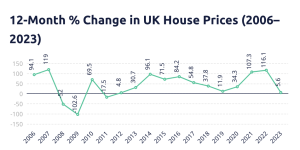
Recent market data shows that price growth has slowed to around 1–3% annually, depending on the region, reflecting a more stable market rather than a declining one.
At the same time, transaction volumes have dipped slightly, indicating caution rather than collapse.
Meanwhile, rental demand remains under pressure due to limited supply, even as some renters transition into homeownership.
What you’re seeing is not a drop in demand.
You’re seeing a rebalancing of demand across different segments.
Why the Rental Market Still Reveals the Real Story
If you want to understand demand in its purest form, you look at the rental market.
Because unlike buyers, renters cannot delay their need for housing.
They still need somewhere to live — regardless of interest rates, market conditions, or economic uncertainty.
This is why rental prices have remained under upward pressure, even as other parts of the market have stabilised.
When supply tightens, rents rise.
And when rents rise, it confirms one thing:
Demand is still there — and still competing for limited space
The Shift in Where Demand for property Is Strongest
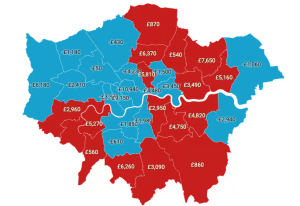
Demand in the UK is no longer evenly distributed.
It has become increasingly localised.
Data shows that more affordable regions, particularly in the North and Midlands, are seeing stronger relative activity compared to London, where affordability constraints are higher.
This shift is not temporary.
It reflects a deeper change in how people make decisions.
Buyers are no longer driven purely by location. They are driven by value, affordability, and lifestyle.
This is why some regions outperform even when the national market appears flat.
What Most Investors Get Wrong About Demand for property
Here is where the difference between average and strategic thinking becomes clear.
Most investors look for where demand already exists.
Experienced investors look for where demand is under-served.
Because that is where opportunity lies.
Two areas can both have demand. But if one has limited supply and strong fundamentals, it will perform better over time.
Demand is not just about volume.
It is about sustainability and pressure.This is why experienced investors often look beyond surface trends and focus on opportunities where design, layout, and usability can unlock hidden value — particularly through strategies such as extensions and reconfiguration.
How Demand Translates Into Property Performance
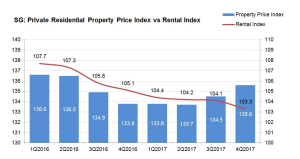
Every outcome in property links back to demand.
When demand for property exceeds supply, prices tend to hold or rise. When rental demand is strong, yields improve. When demand weakens relative to supply, growth slows.
But the key is not current demand.
It is future demand.
This is why experienced developers and investors focus on underlying drivers such as population trends, employment growth, and infrastructure — rather than short-term movements.
The Role of Planning and Design in Responding to Demand for Property
Understanding demand for property is only half the equation.
The real value comes from responding to it correctly.
Planning determines what can be built, while design determines how effectively that space meets real needs.
Understanding how planning policies shape development is critical, and resources such as the Planning Portal help clarify what can and cannot be built.A project that aligns with demand will perform.
A project that ignores it will struggle — even in a strong market.
What This Means for the Future of the Market
Looking ahead, the UK property market is not entering a collapse phase.
It is entering a stability phase.
Forecasts suggest moderate price growth of around 2–4%, supported by improving affordability and economic conditions.
Demand for property will continue to exist because the underlying drivers have not changed.
What will change is how that demand behaves.
It will become more selective, more value-driven, and more sensitive to quality.
How Muse Architects Helps You Work With Demand for Property (Not Against It)

If you are planning a project, the most important question is not whether demand exists.
It is whether your project aligns with it.
At Muse Architects, the focus is on understanding that alignment from the start.
That means looking beyond surface trends and considering how planning, design, and market behaviour interact.
Because in today’s market, success is not about following demand — it is about interpreting it correctly and aligning your project with real market needs from the very beginning.
FAQs
What drives demand for property in the UK?
Demand for property is driven by population growth, limited housing supply, affordability, and economic conditions.
Is property demand falling in 2026?
No. Demand for property is stabilising and shifting across buyers and renters, but remains structurally strong.
Why are rents still increasing?
Because housing supply remains limited while demand continues, even if growth has slowed.
Where is demand strongest in the UK?
Demand is strongest in more affordable regions with strong employment and infrastructure.